Wood-burning, built in the yard, made for Wisconsin winters
Outdoor Fireplaces in Eau Claire, WI: Custom Stone and Brick Masonry
A real footing below frost, a firebrick firebox, and a chimney that takes the smoke up and over your chairs. If a fire pit or a kit suits your yard better, we’ll tell you.
Serving Eau Claire, Altoona, Chippewa Falls, Lake Hallie, Menomonie, Fall Creek and the surrounding Chippewa Valley
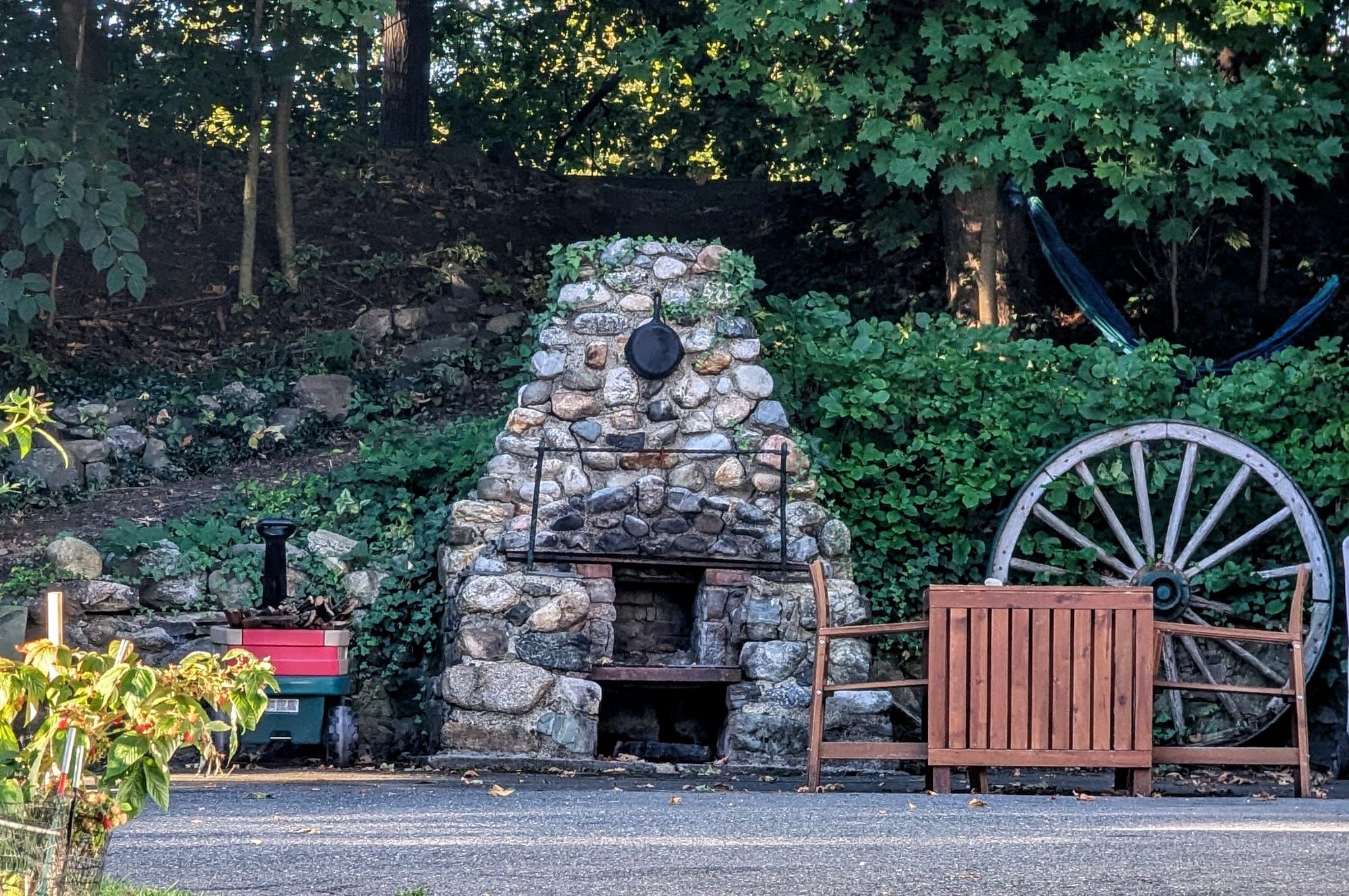
Custom Outdoor Fireplaces in Eau Claire: What We Build
An outdoor fireplace is a small building with no walls around it. It gets rain on every face, snow in the firebox and frost under the footing.
In Eau Claire the normal overnight low stays below freezing from November through March, and a fireplace takes all of that with nothing to warm it. Most of what separates a fireplace that lasts from one that splits is underground or inside the core, where nobody sees it. We build wood-burning fireplaces in natural stone, in brick, or in stone veneer over a block core.
The masonry we build
- The footing under the fireplace, dug below frost.
- The block or stone core, firebox, firebrick and hearth.
- The chimney, flue liner, crown and cap.
- The finish: natural stone, brick, or stone veneer over block.
Fireplace work for other trades
- Gas lines and burners. A plumber or gas fitter runs the line and sets the unit.
- The patio. We don’t pour concrete patios or lay pavers. We can tell that contractor where the fireplace sits.
- Fire pits and metal units. Those are bought more than built.
Masonry Outdoor Fireplace, Prefab Kit or Fire Pit?
These three get searched for as if they were the same thing. They differ in cost by a factor of ten or more, and they do different jobs in a yard.
| Built masonry fireplace | Prefab unit or modular kit | Fire pit | |
|---|---|---|---|
| What it is | Stone, brick or veneered block laid on site, with a firebrick firebox and a lined chimney | Factory-made units or numbered block pieces stacked to a set design | A ring of steel or block, open on top, with no chimney |
| National price | About $6,000–$21,000 for a custom build | About $1,200–$8,335; contractor kits $1,250–$3,750 before any veneer | About $300–$1,400 |
| What it sits on | Its own footing below frost | What the maker calls for, usually a reinforced slab or pad | Level gravel or a patio that can take the heat |
| Where the smoke goes | Up a chimney, above most people sitting around it | Up a shorter chimney, set by the kit’s design | Everywhere the wind goes |
| Who it suits | A permanent yard and a design that has to fit it | A set budget, a standard size, a level site | People who want to sit around the fire instead of facing it |
Prices are national figures from Lawn Love's outdoor fireplace cost guide (updated December 27, 2025) and Fixr's fire pit cost guide (updated January 31, 2025), checked November 2026. Typical ranges, not quotes.
Building an Outdoor Fireplace in Eau Claire, From Footing to Cap
Wisconsin’s Uniform Dwelling Code is written for houses and what’s attached to them, and it doesn’t mention a freestanding yard fireplace. It is still the best yardstick around for one that has to survive this climate, so its fireplace and chimney numbers are the ones we use as our starting point.
A footing below frost, not a pad on the lawn
Go down at least 4 feet, or past the frost if it runs deeper: that’s the footing depth in SPS 321.16. SPS 321.15 adds that a fireplace footing should stand out 4 inches past the fireplace on each side and be 12 inches thick. That is a lot of hole for a yard feature, and it’s why a good one costs what it does.
The Forest Service’s 1937 guide to campground fireplaces drew the same line that still works today: a low unit with no heavy end can ride the frost on a reinforced “floating pad,” while one with a chimney, where the weight stacks at one end, needs a foundation below the frost line.
Why the patio can’t carry it
A masonry fireplace weighs tons on a footprint the size of a dining table. A patio slab or paver bed was built for chairs. If the patio doesn’t exist yet, the fireplace goes first and the patio contractor works up to it. If it does, a section comes out so the footing can go in, and a new fireplace is often better placed just off the edge of the patio anyway.
Firebox, flue and top
We take the firebox from the same rules as a house fireplace: firebrick at least 2 inches thick in thin joints of refractory cement, inside at least 8 inches of masonry at the back and sides. The flue is lined. The Forest Service was blunt about that in 1937, calling for a lining “in every instance.” Then a sloped crown with a drip edge and a metal cap close the top, because that’s where water gets in first.
Planning a Fireplace for Next Summer? Text a Photo of the Spot
Stand at the back door and take one wide shot that shows the spot, the patio, your roofline and the neighbor’s fence. Tell us which way the evening breeze usually comes from. That’s enough for us to say whether the spot works, and whether masonry or something cheaper makes more sense there.
Outdoor Fireplace Materials: Fieldstone, Limestone and Brick
The structure under all three is much the same. The choice is about what the fireplace should look like next to your house, and what it costs in labor to get there.
| Natural stone | Brick | Stone veneer over block | |
|---|---|---|---|
| What goes up | Fieldstone, limestone or sandstone laid full thickness | Whole brick around a block core | Thin stone, natural or manufactured, on a block core |
| Look | Heavy and irregular. Suits rural lots, wooded lots and older stone houses. | Crisp and tailored. The natural match for a brick house. | Can match stone already on the house front |
| Weather | Very durable once the joints and the top are right | Only brick rated for severe weathering, Grade SW in the ASTM specifications | Depends on the top: water behind veneer is what pushes it off |
| Weak point | Slowest to lay, so labor runs highest | Soft salvaged brick that spalls in its first few winters | Joints and caps where the veneer stops |
| Where the fire touches | Never the face stone. Firebrick lines the firebox. | Never the face brick. Firebrick lines the firebox. | Never the veneer. It stays out of the firebox. |
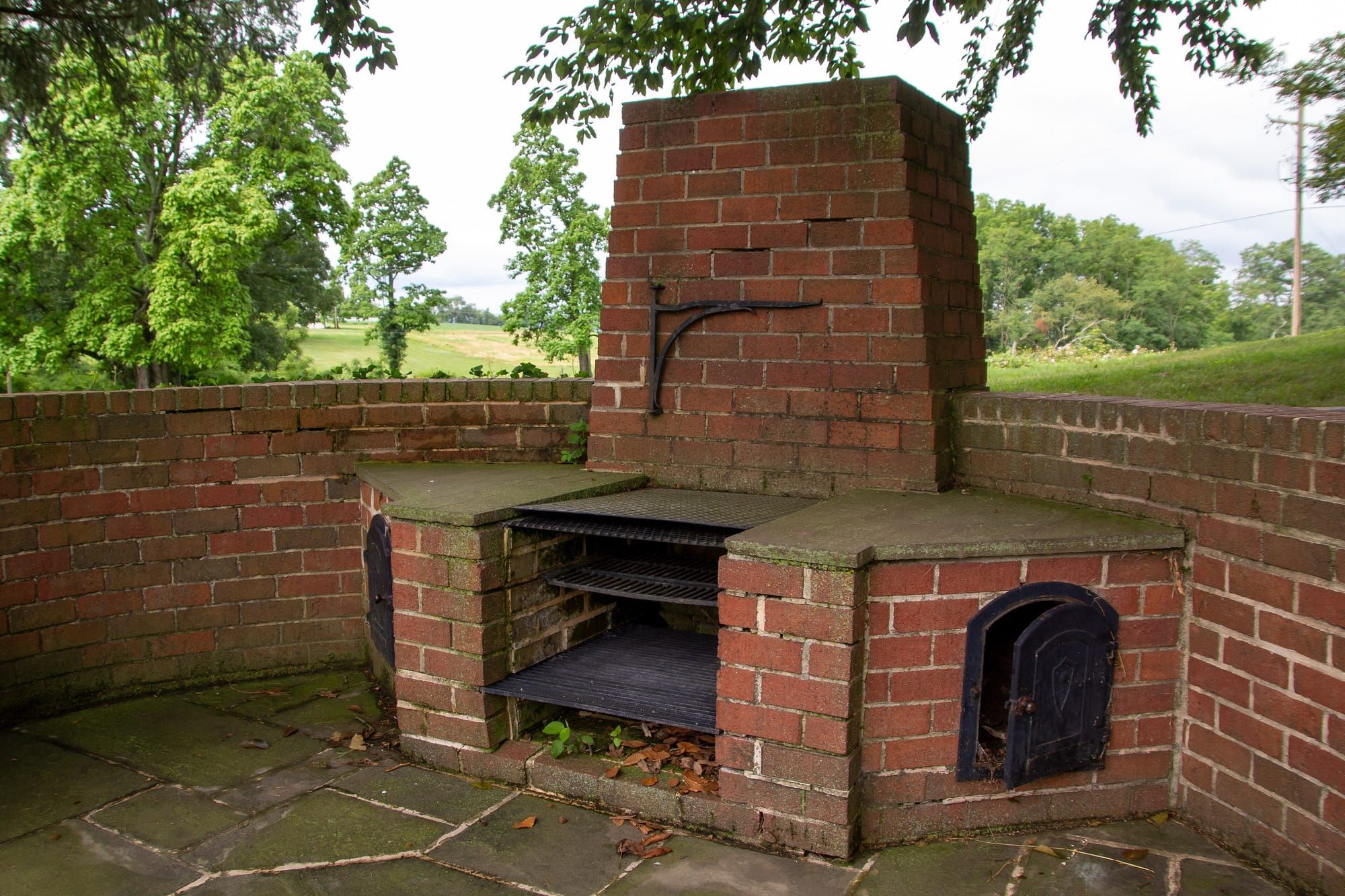
Matching an outdoor brick fireplace to the house
Brick is the most exposed material here, so grade matters. The Brick Industry Association’s specification notes mark Grade SW as the one for severe weathering, and that’s what belongs in a freestanding fireplace in Wisconsin. Old salvaged brick is tempting for looks, but much of it was never made to stand in the weather on all four sides.
Stone has its own page: full-thickness walls and fieldstone are on our stone masonry page, and manufactured and thin natural stone choices are on our stone veneer page. The fireplace uses the same materials.
Where an Outdoor Fireplace Can Go in Eau Claire: Burn Rules and Setbacks
Most guides stop at “check local codes.” Here is what the City of Eau Claire’s code and fire department actually say. To the city, a masonry outdoor fireplace is a campfire receptacle.
- No burn permit for a campfire. Ordinance 16.32.015 allows outdoor cooking and campfires without a permit, “subject to restriction by the department at any time.”
- Masonry counts. The fire department’s campfire page says a receptacle can be a pre-built outdoor fireplace or one built of brick, stone, rock or cement.
- Keep the fire inside it. Firewood, flame and ash should stay within the receptacle and not overlap its sides.
- Clean, dry firewood only. No plastics, trash, garbage or anything that makes noxious fumes. Wisconsin’s DNR also bars painted, treated, laminated or glued wood from any open burning.
- Someone stays with it. The fire has to be attended until it is out, with a garden hose or other extinguishing equipment ready.
- Smoke can end the evening. If smoke is excessive or becomes a nuisance, the fire department may require you to put the fire out.
The 36-inch firebox question
The fire department’s page says a receptacle “should be sized to maintain a controlled fire, typically 36 inches or less.” It doesn’t say what the 36 inches measures, and it’s guidance rather than a line in the ordinance. But plenty of outdoor fireplace designs have firebox openings wider than that. Before anyone settles on a big opening, we’d put the drawing in front of the Fire Prevention Division and ask.
Fireplace setbacks: two numbers that mean different things
The city’s Land Development Ordinance lets accessory structures on one- to four-unit lots sit 2 feet from interior side and rear lot lines, and no closer to the street than the house. It doesn’t name outdoor fireplaces, though its “structure” definition is broad, so ask Planning how it applies to your lot.
Two feet from the fence is a zoning number. The campfire rule is the one that actually governs: a safe distance from fences, houses, garages, overhead wires and trees, with no figure given. BobVila.com’s guide says clearances are often a minimum of 10 feet, and that’s where we start.
Outdoor fires outside the city limits
Rules change at the line. Wisconsin’s DNR says state regulations allow fires for cooking, ceremonies or recreation except during Emergency Burning Restrictions, and that its burning permits don’t apply inside incorporated cities and villages, which often set their own rules. Altoona, Chippewa Falls and each town can differ, so we check where your lot sits first.
Fireplaces on sloped yards
A fireplace can be dug into a hillside, but the level spot in front of it may need a retaining wall first.
Outdoor Chimney Height and Smoke: Placing a Fireplace in an Eau Claire Yard
A fireplace in the house has a warm flue and a room feeding it air. Outside you have neither, so proportions do all the work. The Forest Service guide listed what controls draft outdoors: chimney height, firebox size, exposure and the vegetation around it. It also warned that a low chimney is “sometimes not entirely effective” and that one tall enough to work can dominate the unit. That’s the design problem in one sentence.
Flue size comes first
Wisconsin’s table for house fireplaces sets the flue by the opening: one-tenth of the opening’s area for a square or rectangular flue, one-twelfth for a round one, and never under 75 square inches. The Brick Industry Association adds that taller openings need taller chimneys, which is why a wide, tall opening that looks great on a drawing is the one that smokes.
How close to the house a chimney can stand
For a house fireplace, the code wants the chimney at least 2 feet higher than any part of the dwelling within 10 feet. That rule was not written for yard fireplaces, but smoke doesn’t know that. Build near the house and the chimney has to reach past the eaves, or the smoke finds your windows.
Wind and fireplace placement
The state climatology office’s records for Eau Claire run mostly west-southwest. In most yards we’d rather have the fireplace downwind of where you sit, with its back to the breeze. A house, a tree line or a garage upwind can tumble that air into the top of a short chimney, so we look at what surrounds the spot before we settle on a height.
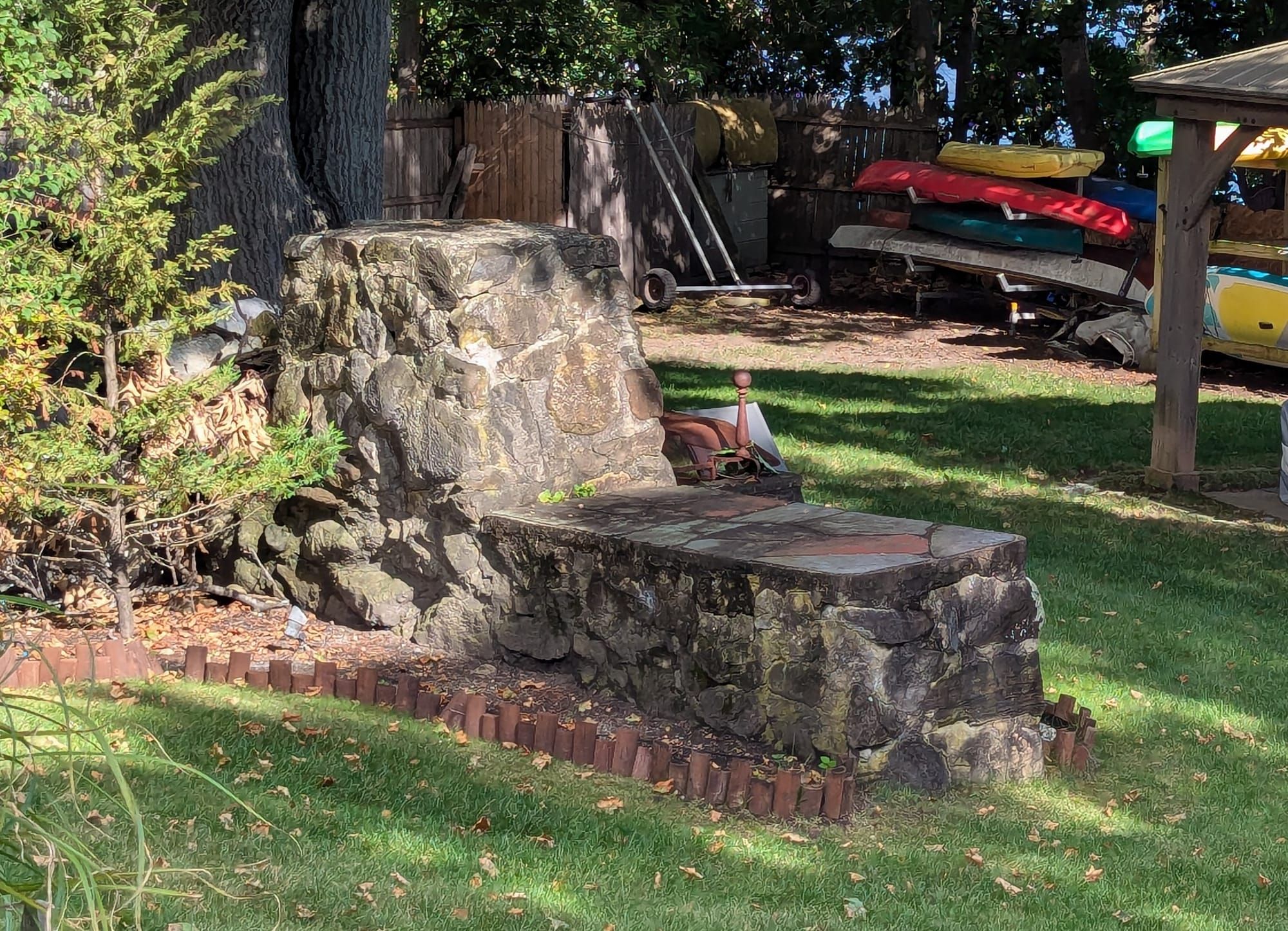
Outdoor Fireplace With a Pizza Oven: What the Combination Involves
A wood-fired oven is a separate chamber with an insulated floor and a domed or arched roof, built to soak up heat and hold it. A fireplace is built to throw heat out. Putting both in one structure means a bigger footing, more weight on it, and a smoke path that has to work for both.
It’s a much bigger masonry job than a fireplace with a nice shelf. Fire Pit Surplus, a retailer, says an oven typically adds from the low $3,000s to the upper $7,000s. And it can’t be added later without trouble, since the footing and chimney are already set. Tell us at the start if an oven is part of the plan.
Wood-Burning vs Gas Outdoor Fireplaces: Which Part Is Ours
We build the outdoor wood-burning fireplace: real logs, real smoke, and a flue to carry it. Gas gives you a flame at the turn of a knob and no ash, and the trade-off is a gas line and a burner that belong to someone else. We don’t run gas lines or set or service burners.
A gas outdoor fireplace needs a plumber or gas fitter, and the city’s permit page puts changes to a fuel supply system under its HVAC permit. Fire Pit Surplus puts a gas line in the low to mid $1,000s. If you want gas, a hearth dealer is the right first call.
When to Build an Outdoor Fireplace in Eau Claire
Wisconsin’s code says footings can’t sit on frozen material, and below 40°F masonry calls for cold-weather procedures. Those two rules set our calendar.
-
Winter
Fireplace design and permits
The ground is frozen and outdoor mortar work would need a heated enclosure, which makes it the time to settle the spot, the size and the finish, and to ask the city what your lot needs.
-
April–May
Fireplace footing and locates
The normal low is still near freezing in April. Once the frost is out, the utility lines are marked through Diggers Hotline and the footing can be dug.
-
June–September
Masonry building season
Footing, core, firebox, chimney and finish, with no temperature limits to work around. Fireplaces planned over the winter get built in these months.
-
October onward
A gamble for mortar
The normal low falls to 36.9°F in October and 24.7°F in November. A footing can’t go on frozen ground, and masonry below 40°F needs cold-weather protection. We may push your job to spring.
Outdoor Fireplace Cost in Eau Claire
Nobody publishes Chippewa Valley prices, so these are national figures. They are typical ranges, not quotes. Watch out for the headline average: Lawn Love’s is $3,000, but that’s pulled down by kits and sits below the bottom of its own range for custom work.
| What | Typical range | Source and notes |
|---|---|---|
| Prefab outdoor fireplace | $1,200–$8,335 | Lawn Love. Size drives most of the spread. |
| Unfinished contractor kit | $1,250–$3,750 | Lawn Love. Veneer materials are not included. |
| Custom outdoor fireplace | $6,000–$21,000 | Lawn Love, for a custom stone or brick build. Fixr’s general range for an outdoor fireplace is $3,000–$10,000. |
| Mason-built brick fireplace | $5,000–$12,000+ | BobVila.com, 2020, so read this one as dated. |
| Full custom masonry with add-ons | $10,000–$25,000+ | Fire Pit Surplus, a retailer, 2026. Applies to builds with extras such as an oven. |
| Pizza oven added | Low $3,000s to upper $7,000s | Fire Pit Surplus, on top of the fireplace. |
| Fire pit, for comparison | $300–$1,400 | Fixr, national average $850. |
Sources: Lawn Love, outdoor fireplace cost guide (updated December 27, 2025); Fixr, fire pit cost guide (updated January 31, 2025); Fire Pit Surplus, outdoor fireplace cost guide (June 10, 2026); BobVila.com, how to build an outdoor fireplace (updated October 7, 2020). National figures, checked November 2026.
What moves the price of a masonry outdoor fireplace
Labor first: Fire Pit Surplus notes that brick and stone fireplaces cost more in labor than materials in most markets. After that it’s the finish (full stone is the slowest to lay), the height of the chimney, how far the stone has to be carried from the driveway, and what’s in the way of the footing, whether that’s an existing patio, roots or a utility line. The gas line and patio are extra and go through their own trades.
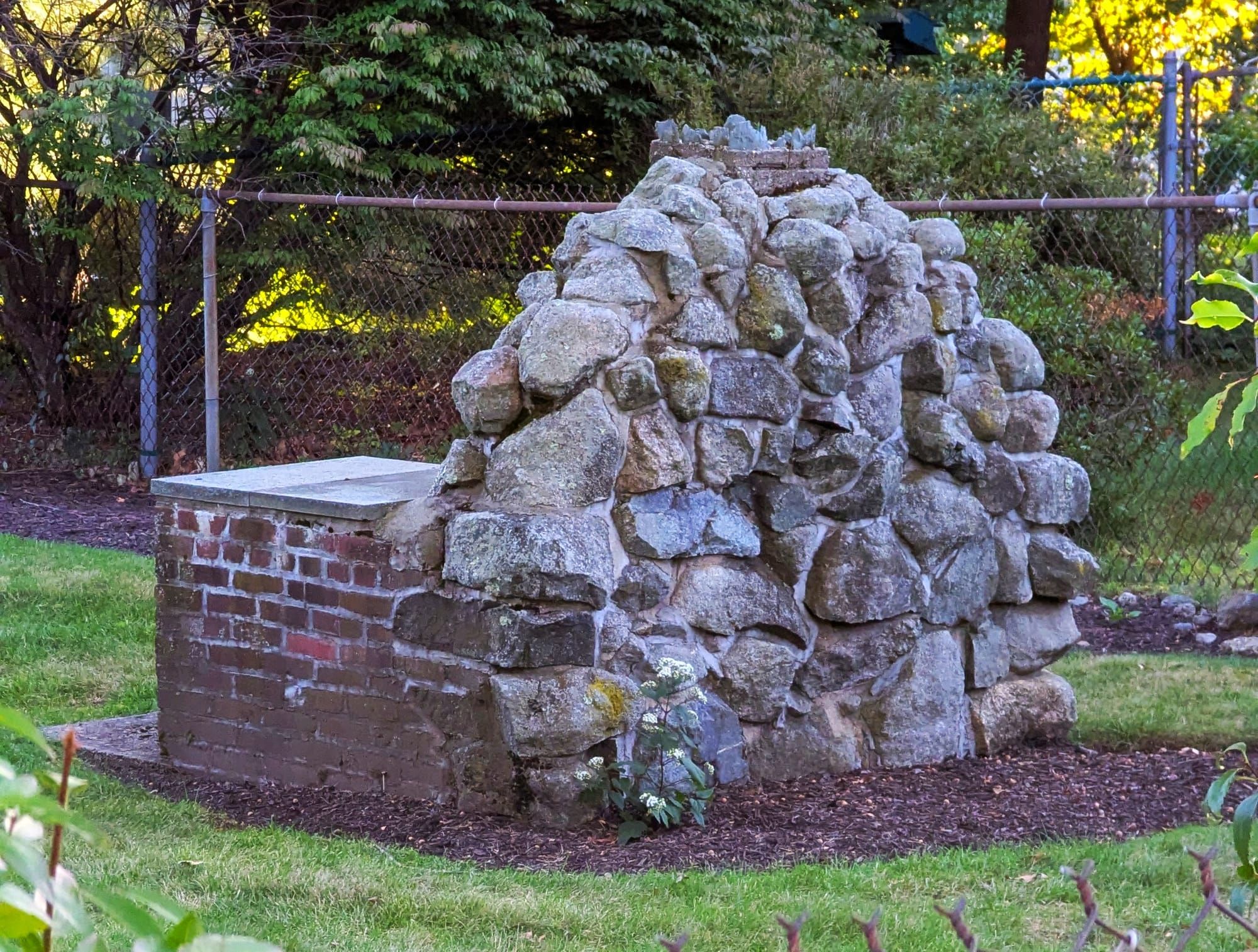
Winter Care for an Outdoor Fireplace
The care is simple, and most of it is keeping water out. With 55 inches of snow in a normal Eau Claire winter, a few minutes before the first freeze pays for itself.
- Keep the top closed. A stainless chimney cap keeps rain, snow and animals out of the flue. Water that gets into the core freezes there.
- Watch the crown. This is the slab at the top of the chimney, and house chimney rules are a fair guide to a good one: 2 inches or thicker, pitched so water runs off, with a drip edge an inch out from the masonry. Fill cracks here before winter.
- Start small after a wet spell. Firebrick soaks up water like any brick. A big, hot fire on a wet firebox can crack it, so start with a small fire and let it dry out.
- Shovel it out. Snow drifted into the firebox melts and refreezes on the hearth. Clear it, and don’t pile the shoveled patio snow against the fireplace.
- Cover the firebox, not the chimney. A fitted door or breathable cover over the opening helps. A tarp tied around the whole thing traps damp and doesn’t do the masonry any favors.
- Skip the sealer until you’ve asked. Film-forming sealers can trap water in stone and brick. Good caps and sound joints do more.
Outdoor Fireplace Questions: Patios, January Fires and Gas Burners
Do I need a permit to build an outdoor fireplace in Eau Claire?
You don't need a burning permit to use one in the city, because Ordinance 16.32.015 allows campfires without one. Building it is a separate question. The city's permit page says a building permit is needed for new buildings and lists fireplaces under its HVAC permit, but it doesn't mention outdoor fireplaces at all. Ask the Inspections Division about your lot before the footing goes in. We'll confirm with them as part of planning the job. Outside the city, ask that municipality or town.
How far should an outdoor fireplace be from the house?
Eau Claire's campfire guidance gives no number of feet, only a safe distance from anything that can burn. Ten feet is a common minimum in building guides, so we begin there and move farther if the wind or a nearby roof calls for it. Closer than 10 feet to the house, the chimney also has to clear the roof to draw and to keep smoke away from windows, which usually makes the fireplace taller than anyone wanted.
Can an outdoor fireplace go on my existing patio?
A masonry one usually should not. It weighs tons and bears on a small area, and an ordinary patio slab or paver base is built for foot traffic, so it can crack or tip as the ground heaves. The usual answer is to cut an opening in the patio and put a real footing under the fireplace. The patio contractor or a concrete cutter handles the opening. A light prefab unit may be fine on a patio if the maker allows it.
Can I use an outdoor fireplace in the winter?
Yes, and on a still January night it is one of the better reasons to own one. The masonry is built for it. Dig out the firebox first, start with a small fire if the firebrick is wet or frozen, and burn dry wood. Fire restrictions still apply whatever the season.
Can a gas burner be added to a masonry outdoor fireplace later?
Usually, if the firebox is big enough, the gas line can reach it and the burner is made for outdoor use. That is a job for a plumber or gas fitter and a hearth dealer, not us. If gas is a real possibility, tell us before the footing goes in, so a sleeve for the line can be planned.
My old outdoor fireplace is cracked. Is it worth saving?
Often. Loose stone, open joints and a cracked top are ordinary masonry repairs, and firebox work is the same as on an indoor fireplace. A unit that has split in two or is leaning has usually been moved by frost, because it never had a footing below it. Repairing the top of one of those buys a few years at best. Send a photo of the whole thing and we will tell you which you have.
How long does it take to build an outdoor fireplace?
Longer than a kit, and the calendar matters more than the labor. Utility locates need at least three working days, the footing has to cure before masonry loads it, and stone goes up slowly. The bigger wait is usually for the season. Ask for the schedule with your estimate. If a fireplace is meant for a July party, the plan should start in winter.
Get a Free Outdoor Fireplace Estimate
Tell us where you picture it, what you’d like it to look like, and whether a patio is already there. Photos of the yard and your house help. Text them if that’s easier.
- We look at the spot, the wind and the house before we price anything
- Footing, firebox, chimney and finish, each priced in writing
- Told plainly if a kit or a fire pit would serve you better
Get a Free Estimate
Tell us what's going on with the masonry or stucco. Prefer to talk? Call or text (715) 597-4359.
Thanks, we have your request.
We'll be in touch about your estimate. If it's easier, text photos of the job to (715) 597-4359.
Get the Fireplace Planned Before the Ground Thaws
Call, or text a photo of the spot. Use the contact page if that’s easier. For work on the house itself, start at our Eau Claire masonry contractor home page.