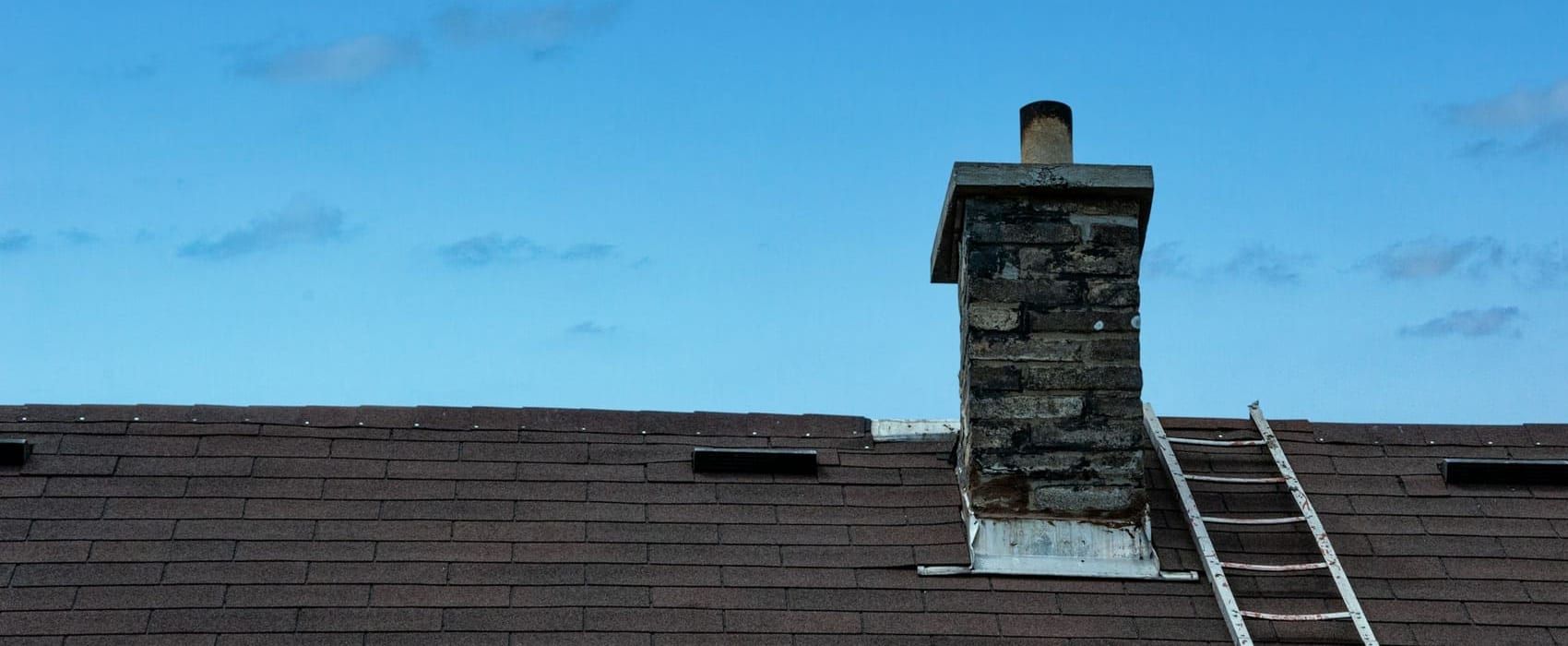
Chimney Repair in Eau Claire, WI
Leaks, cracked crowns, failed flashing, missing caps, spalled brick and washed-out mortar. We find where the water is getting in, fix that part, and tell you what can wait.
Serving Eau Claire, Altoona, Chippewa Falls, Lake Hallie, Menomonie, Fall Creek and the surrounding Chippewa Valley
Chimney Repair Eau Claire Homeowners Call Us For
A chimney is the most exposed masonry on a house. It stands above the roof with weather on four sides and the top, and nothing shelters it. Eau Claire's climate normals show about 33 inches of precipitation and 55.4 inches of snow in a typical year, and the chimney takes every bit of it. Six repairs cover nearly everything that goes wrong.
- Crown repair and replacement. The concrete slab on top of the stack. We seal hairline cracks in a sound crown and tear off and recast one that is crumbling, flat or flush with the brick.
- Chimney caps. Stainless caps over one flue or the whole top, sized and fastened so the wind does not take them.
- Flashing repair. New step and counter flashing cut into the mortar joints, and a cricket behind wide chimneys where snow and water pile up.
- Chimney brick repair. Spalled, cracked and loose brick cut out and replaced with brick that matches in size and color.
- Chimney tuckpointing. Washed-out joints ground back to sound mortar and repointed. Mortar wears before brick does, so this is the most common chimney repair.
- Stone chimney repair. Loose stones reset and wide, irregular joints repointed on fieldstone and cut-stone chimneys.
Missing from that list on purpose: we don't sweep chimneys, inspect flues or install flue liners. That work belongs to a chimney sweep certified by the Chimney Safety Institute of America.
Leaking Chimney Repair: Finding Where the Water Actually Gets In
Most money wasted on chimneys is spent fixing the wrong part. A leaking chimney has four usual suspects, and we check them in the same order every time, from the top down.
-
The top: cap and crown
Water that comes straight down the flue or through a cracked crown shows up inside the firebox, at the damper, or as a stain high on the chimney breast. It is the first place we look because it is the most common and the cheapest to fix.
-
The roofline: flashing
A stain on the ceiling or wall beside the chimney, worst after wind-driven rain or during a thaw, points to flashing. The uphill side fails first because that is where snow sits.
-
The stack: brick and joints
Brick and mortar soak up rain like a sponge when the joints are open. This leak is slow. The damp patch appears a day after the storm and white salt stains bloom on the brick.
-
What is not the chimney
A gas furnace or water heater venting into a cold, oversized flue makes condensation that looks exactly like a leak. So does a roof problem a few feet uphill. We rule both out before anyone pays for masonry.
When the source isn't obvious we run a hose on the chimney one section at a time, starting low. It takes an hour and it beats guessing. If the water is showing up inside the firebox, see our masonry fireplace repair page as well.
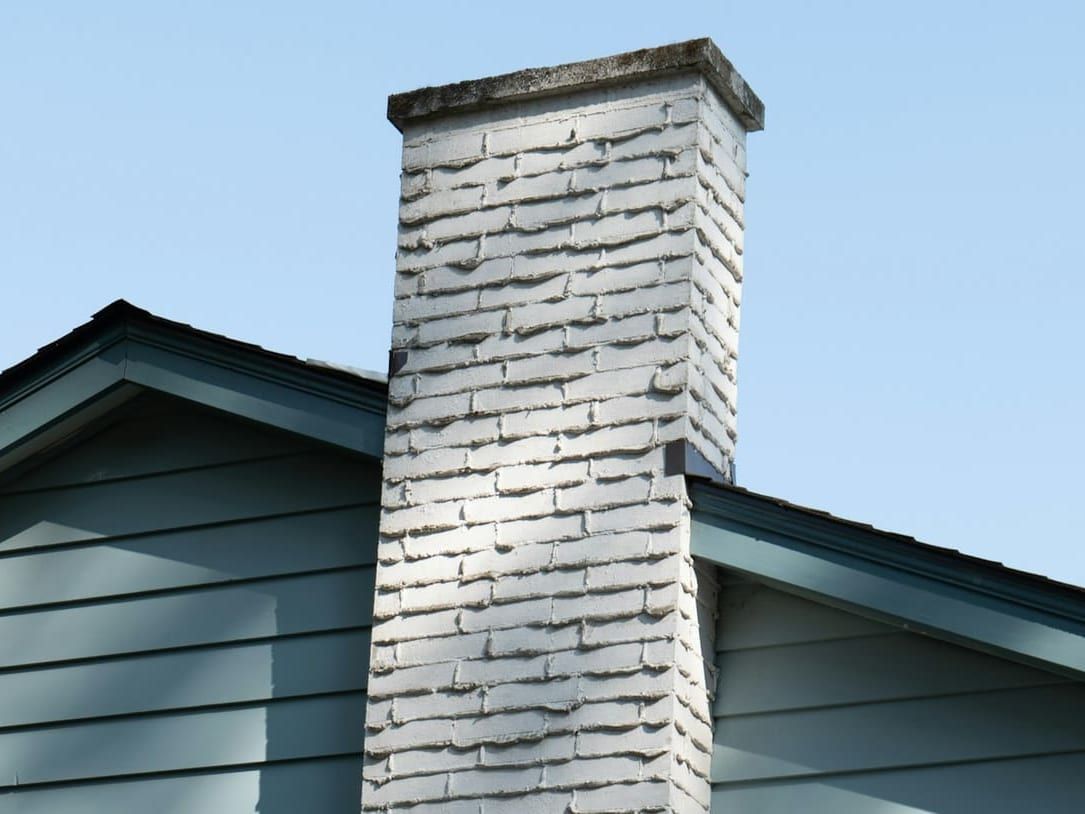
Chimney Crown Repair vs. Replacement
The crown is the concrete lid that closes the top of the stack around the flue. On a lot of older chimneys it was never concrete at all, just leftover mortar troweled flat. Mortar that thin cracks within a few winters, and every crack is a funnel into the brick below.
- Seal it when the crown is real concrete, still sloped and solid, with only hairline cracks. A brushed-on flexible crown coating bridges those cracks and is the least expensive chimney repair there is.
- Replace it when pieces lift out by hand, the top is flat or dished so water ponds, or the crown stops flush with the brick with no overhang.
For new homes, Wisconsin's Uniform Dwelling Code spells out what a proper one looks like: concrete at least 2 inches thick, sloped away from the flue, with a 1-inch overhang and drip edge on all sides, and a slip joint between the flue and the concrete. That joint matters. Flue tile expands when it heats, and a crown poured tight against it cracks. The code doesn't govern repairs, but it is the right target for a replacement crown.
A cracked crown on a sound stack is a crown job. Anyone who turns it into a rebuild should be able to show you the loose brick.
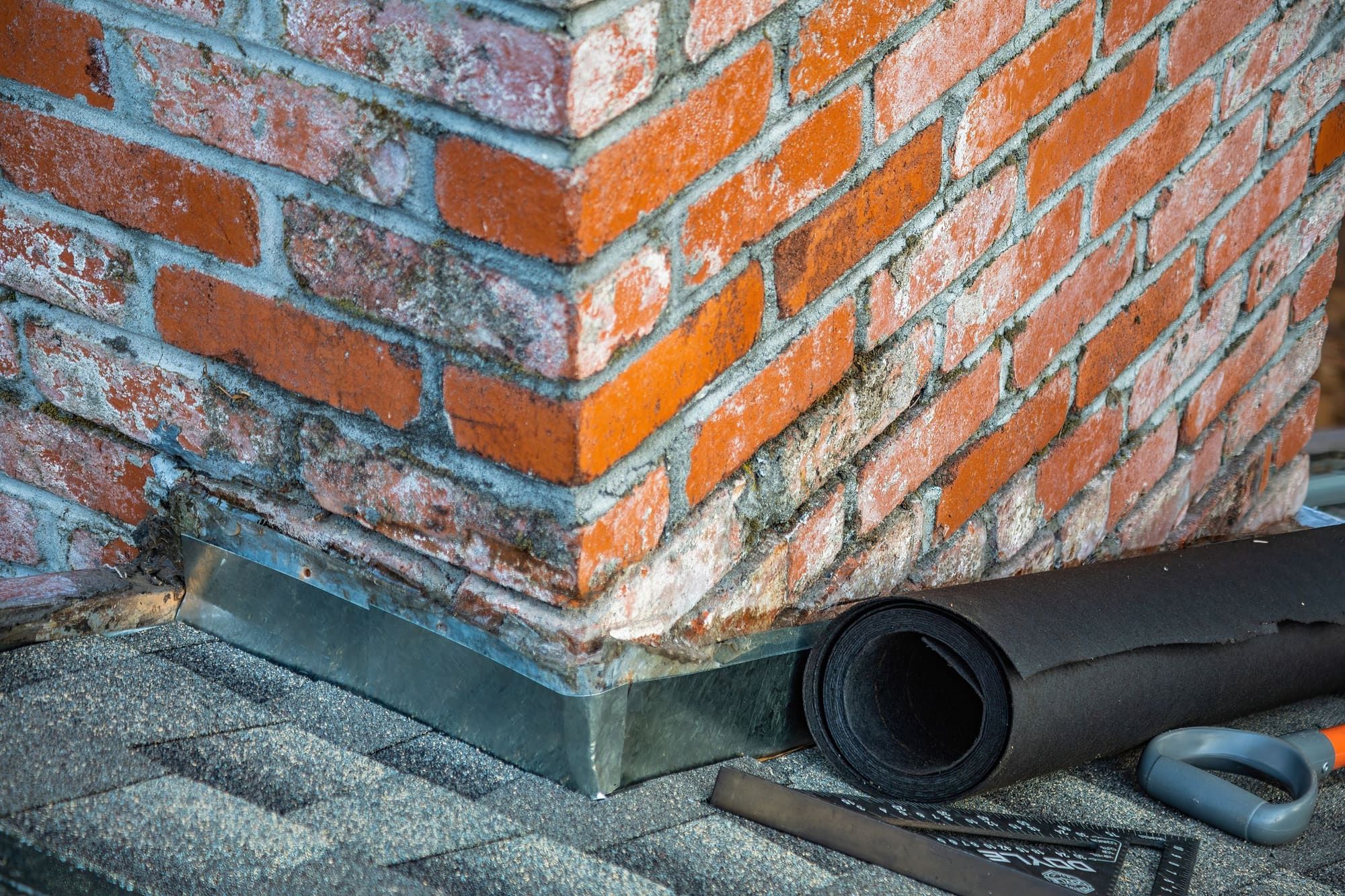
Chimney Flashing Repair Where the Chimney Meets the Roof
Good chimney flashing is two layers. Step flashing is woven up the sides with the shingles, with an apron across the front. Counter flashing is cut into a mortar joint, bent down over the top of the step flashing, and left free. The roof and the chimney sit on different footings and move differently, and two overlapping layers let them.
Caulk and roofing tar fail because they try to glue those two moving things together. They hold for a season or two, then crack, and the crack is hidden under the next layer of tar. When we find flashing that is one thick black smear, the fix is to strip it and start over in metal.
The uphill side is the weak point. The state dwelling code calls for chimneys to be flashed and counter-flashed at least 6 inches high, and for a cricket, a small peaked saddle, behind any chimney more than 30 inches wide. Without one, snow parks against the back of the chimney all winter.
If your roof is due for replacement soon, do the flashing then. Step flashing lives under the shingles, and it makes no sense to pay for it twice.
Text a Photo of Your Chimney, Get a Straight Answer
Stand in the yard, zoom in, and take one of the top, one of each side where the chimney meets the roof, and one of any stain on the ceiling inside. Tell us when it leaks: every rain, only wind-driven rain, or during a thaw.
We'll tell you what we can see and what we can't. A photo doesn't replace getting on the roof, but it often tells us which trade it needs, a mason, a roofer or a sweep, before anyone makes a trip.
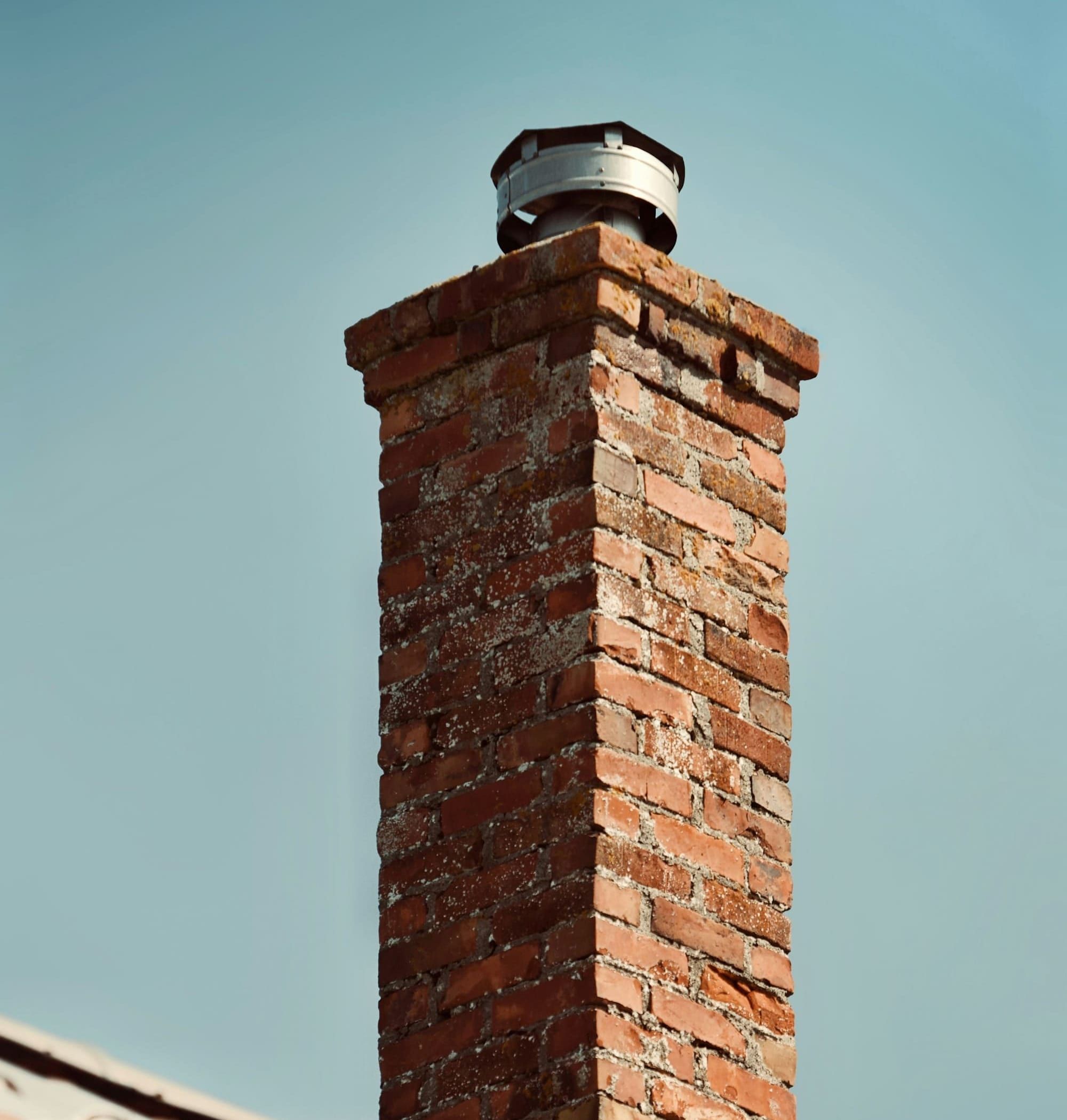
Chimney Caps and Who Installs Them
An open flue is a hole in the roof. Rain falls straight down it, rusts the damper and soaks the smoke shelf, and squirrels, raccoons and birds treat it as a hollow tree. A cap with a solid lid and mesh sides stops all of that.
Masons, sweeps and some roofers all install chimney caps. We fit them when we are already repairing the chimney, and that is the cheapest time to do it because the roof is staged.
- Single-flue caps clamp to the clay flue tile where it sticks up through the crown. Quick to fit, and they protect only that flue.
- Multi-flue caps fasten to the crown and cover the whole top. They suit chimneys with two or three flues, or a flue tile too short to grip.
- Stainless steel costs more than galvanized and is worth it. Galvanized caps rust through, and the rust runs down the brick in orange streaks that do not wash off.
A cap is not a cure for a bad crown. If the crown is cracked, a new cap on top of it keeps the rain out of the flue and does nothing for the masonry.
Spalled Brick and Failing Mortar on Eau Claire Chimneys
A house wall is warmed from inside and sheltered by the eaves. A chimney above the roof gets neither, so it freezes wet. In Eau Claire the normal overnight low is below freezing from November through March, while November and March afternoons still reach the low 40s. That is weeks of thawing by day and freezing by night, with snowmelt soaking in between.
Mortar goes first. Joints weather back, sand washes onto the shingles, and water gets behind the face of the brick. Then the brick spalls: the fired face pops off and leaves a soft core that takes on even more water.
Chimney tuckpointing
If the brick is still sound, chimney mortar repair means grinding the joints out to solid material and packing in new mortar, then tooling it so water sheds. The mortar has to suit the brick. A hard modern mix in an old soft-brick chimney speeds up spalling. How we choose it is covered on our tuckpointing and repointing page.
Replacing spalled chimney brick
A spalled brick can't be patched. Mortar smeared over the face falls off within a winter or two and traps water while it lasts. The damaged units come out and matching brick goes in, usually along with tuckpointing the rest of the stack. The same matching problems come up on walls and steps, and our brick repair and replacement page goes through them.
Stone chimneys
Fieldstone and cut-stone chimneys rarely lose their stone. They lose the mortar around it, and because the joints are wide, there is a lot of it to lose. Repointing is slower than on brick, and loose stones get lifted out and rebedded so they don't rock.
How Much Does Chimney Repair Cost in Eau Claire?
We can't price your chimney from here, and nobody can from the driveway. What we can do is show you what two national cost guides, HomeAdvisor and Fixr, publish for each repair, so you can tell whether a bid is in a believable range. These are typical ranges, not quotes.
| Repair | Typical range | What the guides say |
|---|---|---|
| Chimney leak repair | $150–$500 | HomeAdvisor and Fixr give the same range. It covers the simple fixes: sealing a crown, resetting a cap, resealing flashing. |
| Chimney crown repair | $150–$1,000 | HomeAdvisor: $150–$350 to repair. Fixr: $750–$1,000 for heavier repair and $1,000–$3,000 for a new crown. |
| Chimney cap | $100–$600 | Fixr: $100–$250 to repair, $300–$600 to replace. HomeAdvisor puts a replacement at about $300. Multi-flue caps cost more. |
| Chimney flashing | $200–$800 | Fixr: $200–$300 to repair, $300–$800 to replace. A steep roof or a new cricket pushes it up. |
| Chimney tuckpointing | $500–$2,500 | Fixr, per chimney. HomeAdvisor prices it at $10–$25 per square foot. |
| Chimney brick repair | $100–$1,000 | Fixr, for replacing damaged brick. Widespread spalling is listed at $1,000–$2,500. |
| Flue repair (not our work) | $300–$1,000 | Fixr, for cracked flue tile. Relining runs $1,200–$4,600 (Fixr) or $625–$7,000 (HomeAdvisor). A sweep or liner installer does this. |
Sources: HomeAdvisor chimney repair and tuckpointing cost guides (updated June 2026) and Fixr chimney repair and chimney crown cost guides (updated January 2025). National figures, checked October 2026.
What moves a chimney repair price
Access, mostly. A chimney at the eave of a ranch is reached from a ladder. The same chimney at the ridge of a steep two-story roof needs roof staging or scaffolding, and that setup costs the same whether the repair is small or large. Height above the roof, the number of flues and how hard the brick is to match come next.
Do the repairs together
Because staging is the fixed cost, a crown, a cap and the tuckpointing done in one visit cost less than the same three jobs done a year apart. If we see something that will need attention within a few years, we'll price it as an option and you can decide.
When Chimney Repair Stops Making Sense
Repair works when the stack is solid and one or two parts have failed. It stops working when the structure itself has let go. The signs are consistent: brick you can wiggle by hand above the roofline, a visible lean, mortar that pours out as sand when a joint is opened, or a chimney that has been pointed and patched several times and still leaks.
At that point new mortar on the outside is holding up nothing. The honest answer is to take the chimney down to sound masonry and relay it, and in most cases that means from the roofline up and no farther. What that involves and costs is on our chimney rebuild and restoration page.
The city's Inspections Division says a building permit is generally needed when a building is altered or repaired, but its published guidance doesn't name chimney work either way. For anything beyond a like-for-like repair, we ask Inspections about your address before we start.
Chimney Repair Questions Eau Claire Homeowners Ask
How much does chimney repair cost in Eau Claire?
It depends on which part failed. HomeAdvisor's national guide puts the average chimney repair at $455, with most jobs between $160 and $750. Fixr puts the range at $250 to $1,200. Those figures cover a single repair. A chimney that needs several of them plus tuckpointing will run past the top of both ranges, and we price it in writing after we have been up to look. The table above gives the published range for each part.
Do you repair chimney flues or install liners?
No. Have a chimney sweep certified by the Chimney Safety Institute of America inspect the flue with a camera. If the report also calls for masonry work on the crown, the brick or the smoke chamber, that part is ours, and we will schedule around the liner work.
What is the white stain on my chimney brick?
Almost always efflorescence: salts carried to the surface by water moving through the brick and left behind when it dries. The stain itself is harmless and brushes off dry. What matters is that it marks where water is travelling, so a band of white below the crown or beside the flashing tells us where to look first. Do not seal over it. The salt keeps coming until the water is stopped.
Can I use the fireplace while the chimney is waiting for repair?
Often, yes. A cracked crown, worn joints or bad flashing let water in but do not change how the flue works. Loose brick is different, and so is anything a sweep has flagged inside the flue. Do not burn in a chimney with brick you can move by hand or a damaged liner until it has been looked at.
Can you repair a chimney in winter?
Some repairs, yes. A cap can go on in any weather we can safely get on the roof, and flashing can be replaced on a dry day. Mortar and concrete are different. The Brick Industry Association treats anything under 40°F as cold-weather masonry that needs heat and protection while it cures, and in Eau Claire the normal daily high is below that from December through February. For crowns and tuckpointing we usually make the chimney weathertight and come back in spring.
Get a Free Chimney Repair Estimate
Tell us what you're seeing: a stain by the chimney, sand on the shingles, brick faces in the gutter, a cap that blew off. We'll get on the roof, find the source, and send a written estimate that separates what needs doing now from what can wait. Chimneys are one part of our work as a masonry contractor in Eau Claire.
- We look at the masonry in person, not from the truck window
- You get the scope and the price in writing
- If it can wait a season or needs a different trade, we say so
Get a Free Estimate
Tell us what's going on with the masonry or stucco. Prefer to talk? Call or text (715) 597-4359.
Thanks, we have your request.
We'll be in touch about your estimate. If it's easier, text photos of the job to (715) 597-4359.
Related Chimney and Masonry Services
-
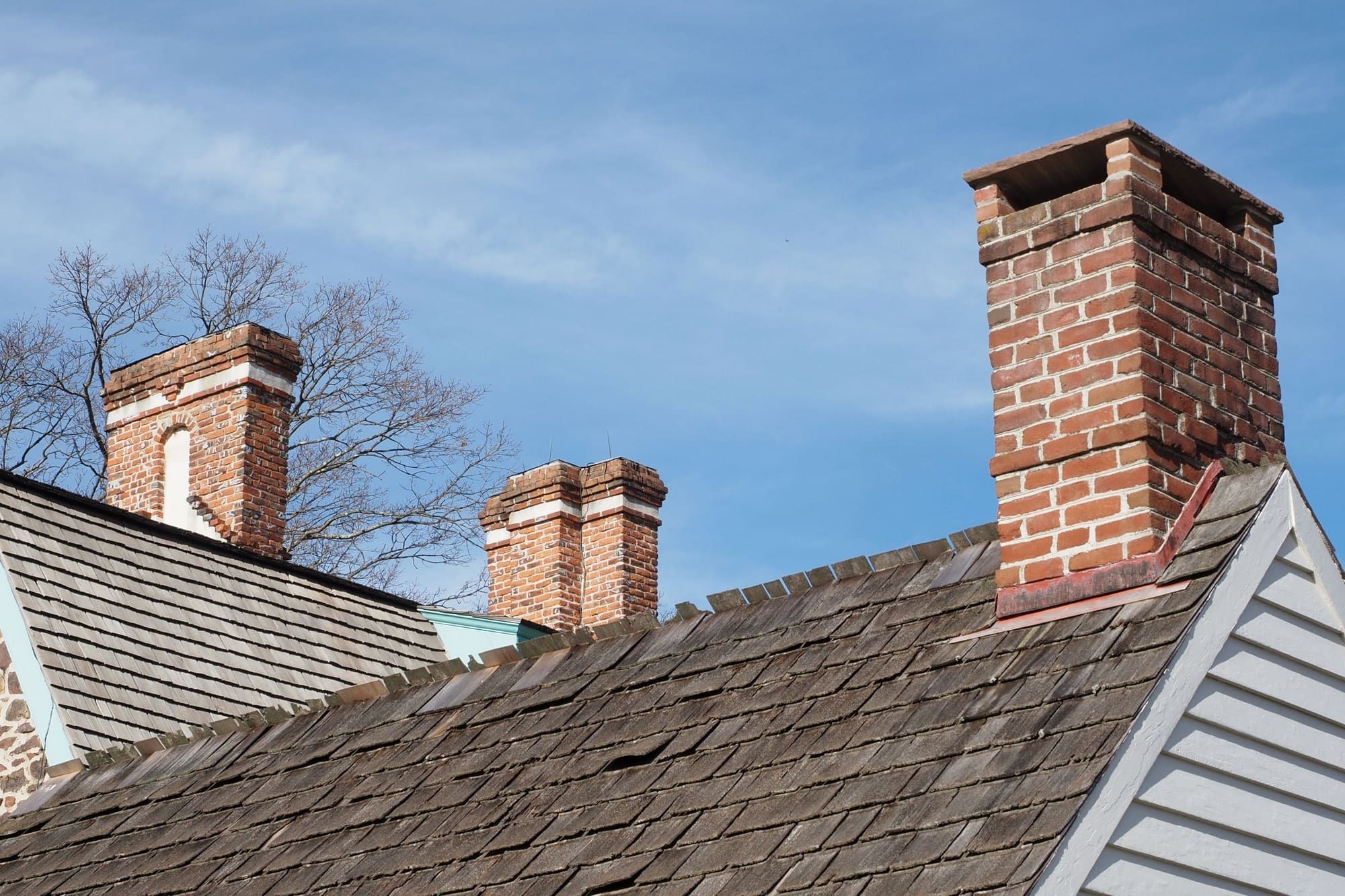
Chimney Rebuild & Restoration
For chimneys that are loose, leaning or past patching: rebuilt from the roofline up, or taken down.
-
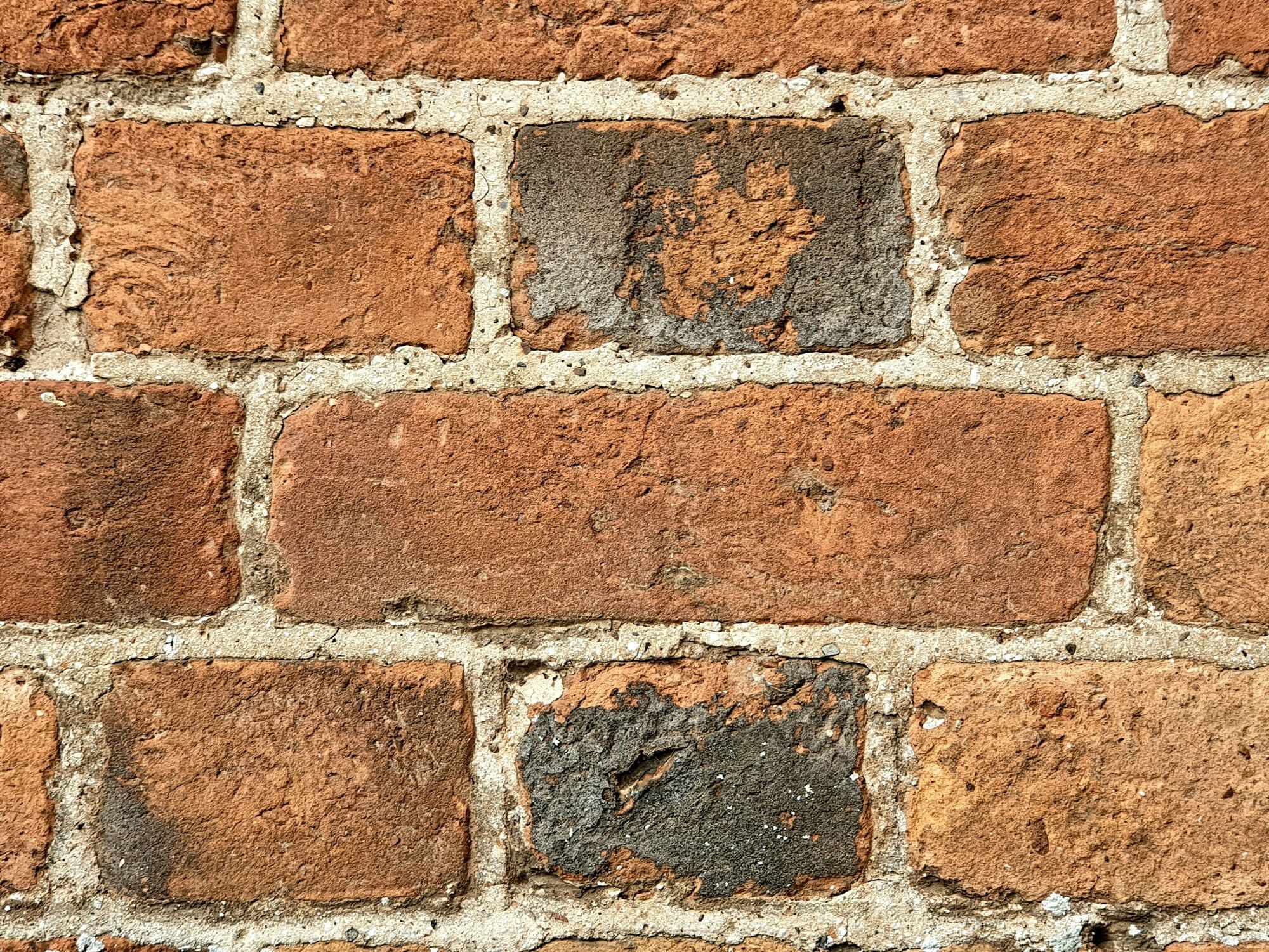
Tuckpointing
The same joint repair on walls and foundations, with mortar matched to the brick.
-
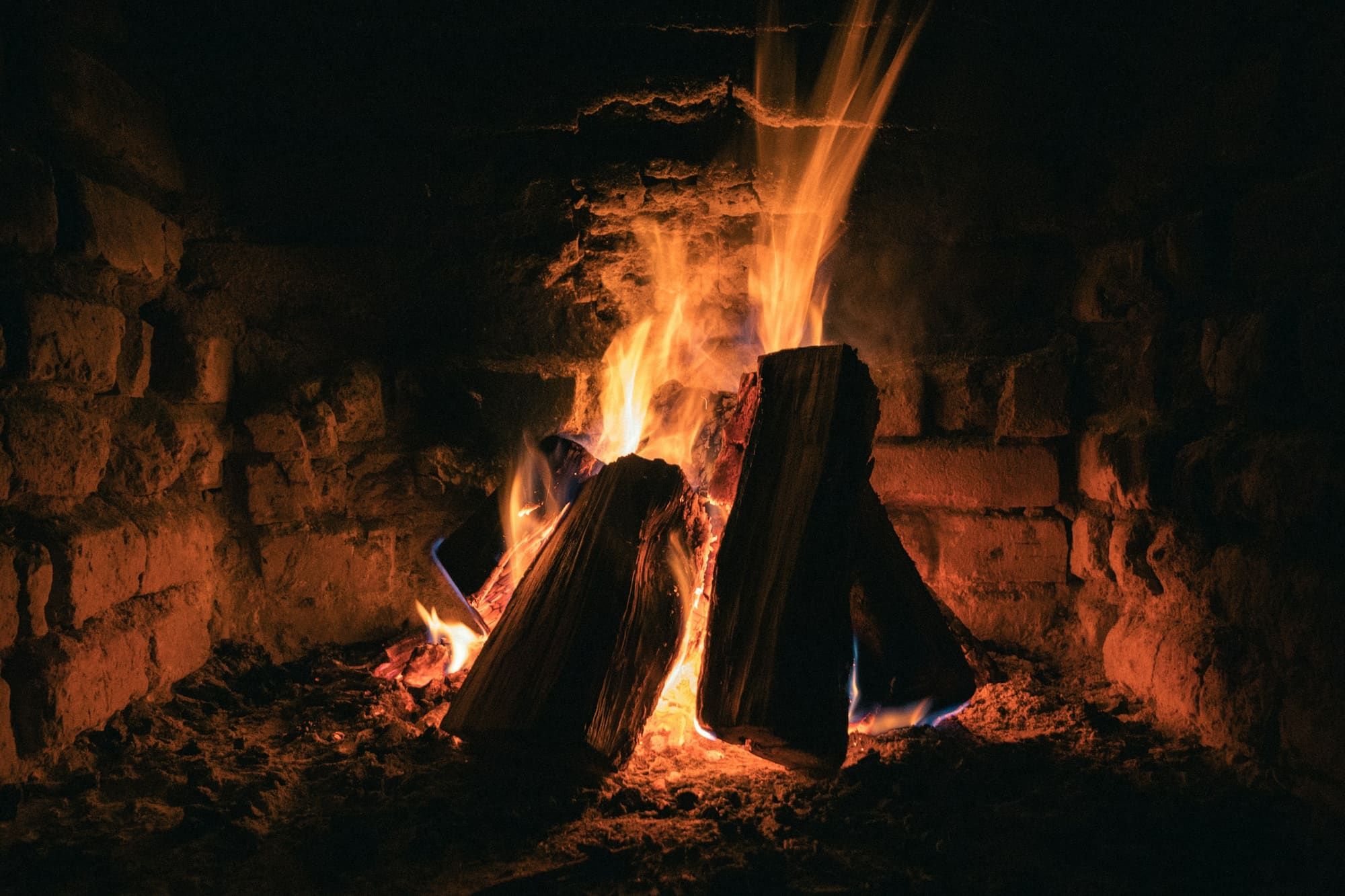
Masonry Fireplace Repair
The other end of the flue: fireboxes, firebrick, smoke chambers and hearths.
-
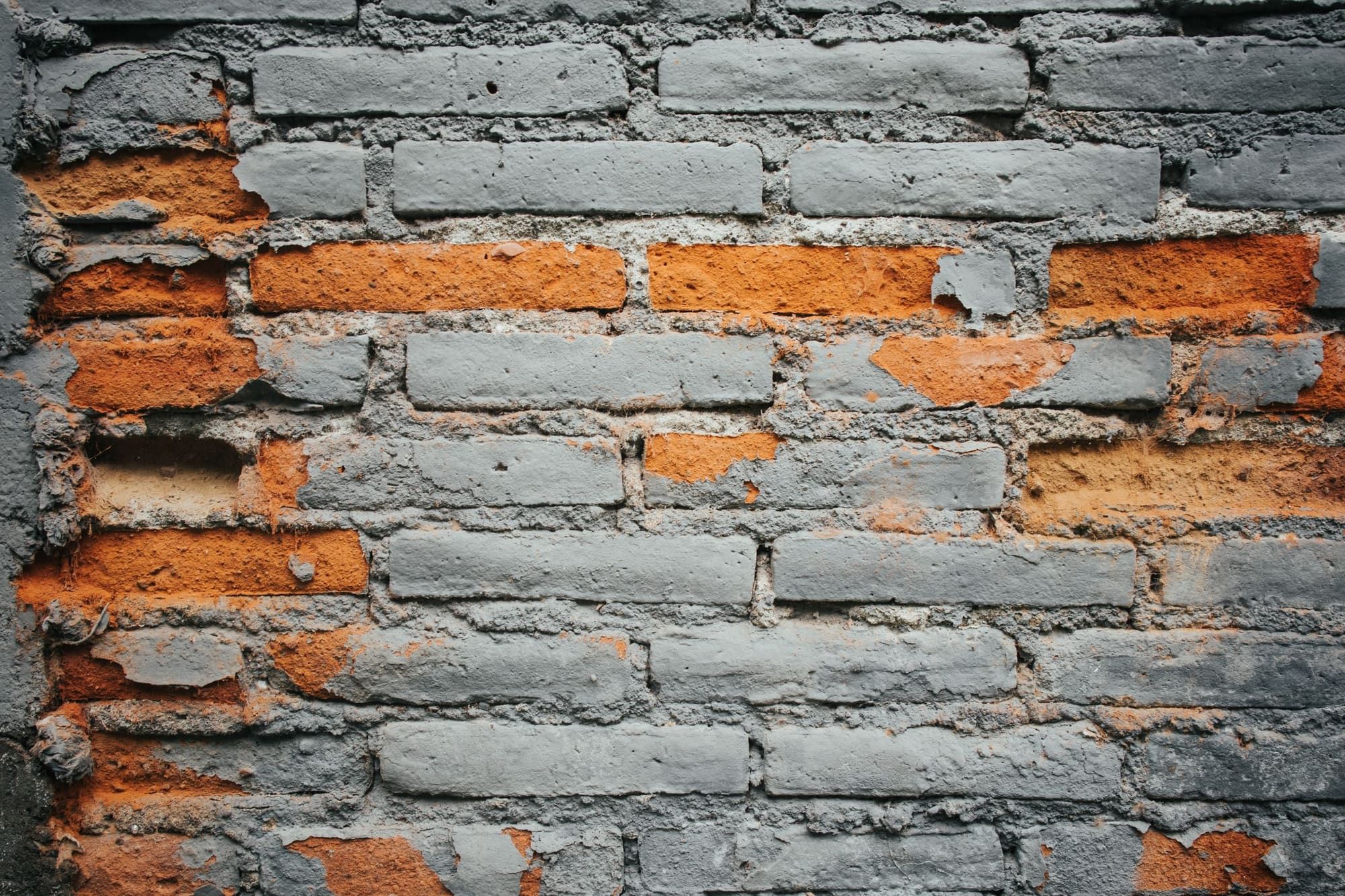
Brick Repair & Restoration
Spalled and cracked brick replaced on walls, steps and stoops.
Leaking Chimney? Find the Source Before You Pay for a Fix.
Call, or text a photo from the yard and tell us when it leaks. Free written estimates in Eau Claire and the Chippewa Valley.