Three-coat cement stucco
Stucco Siding Installation in Eau Claire, WI
New stucco for houses, additions, chimneys and block walls, put on over a wall that is flashed and built to drain. Free written estimates.
Serving Eau Claire, Altoona, Chippewa Falls, Lake Hallie, Menomonie, Fall Creek and the surrounding Chippewa Valley
- Three coats over lath Scratch, brown and finish
- Built to drain Barrier, flashing and weep screed first
- Scheduled for warm weather Cement stucco needs 40°F and up
- Free written estimates Every layer listed, not just the finish
Stucco Siding Installation in Eau Claire
Stucco siding is portland cement plaster troweled onto the outside of a building in coats. It has no seams or laps to work loose, and when the wall behind it stays dry it lasts for generations.
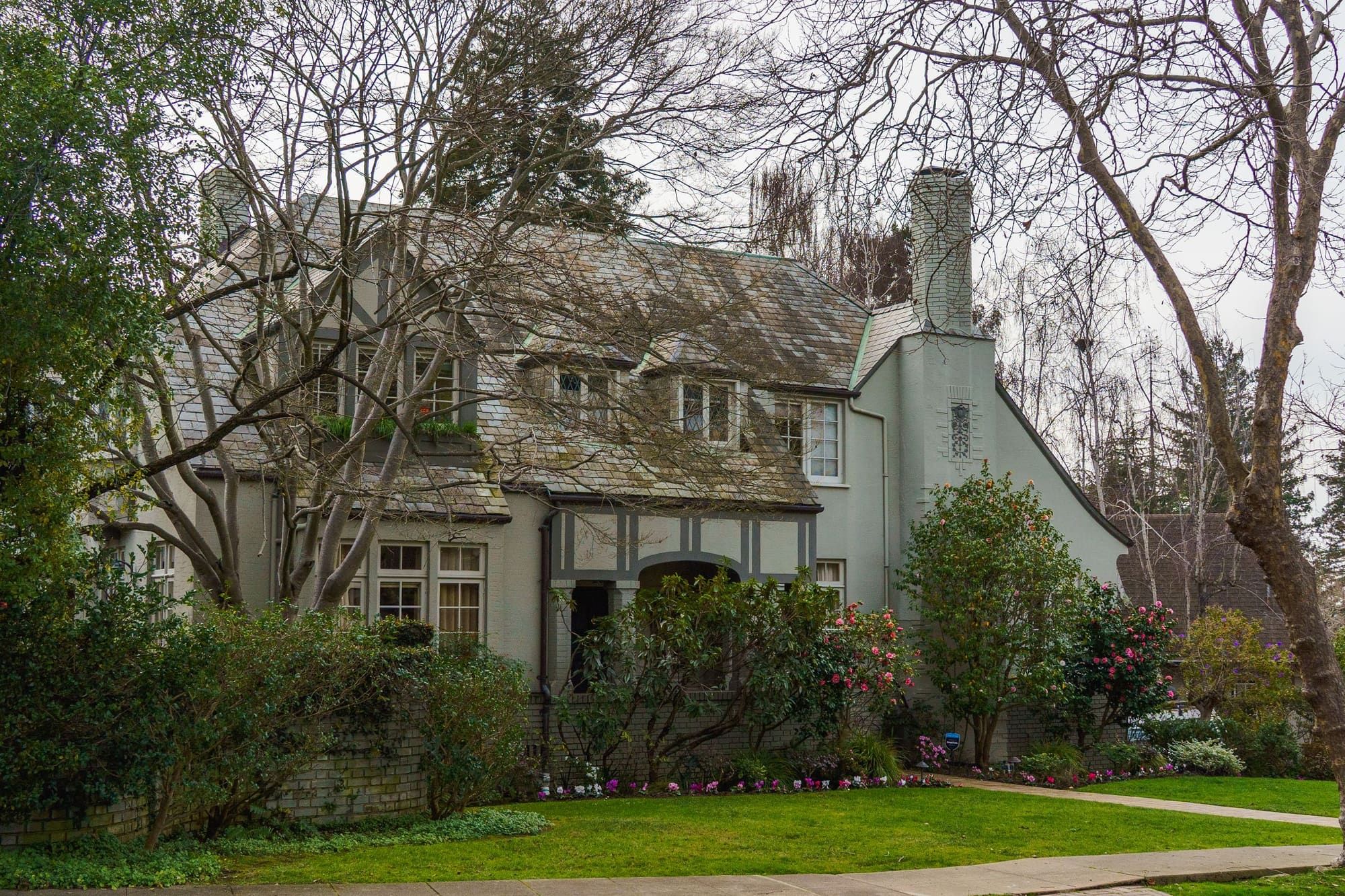
It is not new here. The state's historic property inventory records stucco houses on Park Avenue built in 1928, one Tudor Revival and one Mediterranean, and the 1940 Phillips house in the Park Company Addition is listed as brick and stucco. Those walls have been through every winter since.
These are the places we install it.
- Whole houses. New construction, or a re-side where the old siding comes off down to the sheathing first.
- Additions. A new wing on a stucco house has to match the old walls in texture and color, which is most of the skill in the job.
- Gables and upper walls. Stucco above a stone or brick base is a common front. The joint between the two needs its own flashing.
- Chimneys. Block chimneys and framed chases finished in stucco, with proper flashing at the roof.
- Block walls and foundations. Garages, exposed basement walls and porch piers. Stucco goes straight onto clean block.
- Porch ceilings and soffits. Overhead work on lath, usually in a smooth or fine sand finish.
Three-Coat Stucco vs One-Coat Stucco vs EIFS
Three different walls get called stucco. They cost different amounts, go on at different speeds and take abuse differently. Ask any stucco contractor which one a quote is for.
| Three-coat stucco | One-coat stucco | EIFS (synthetic stucco) | |
|---|---|---|---|
| What it is | Scratch, brown and finish coats of portland cement plaster over metal lath | A single fiber-reinforced base coat, then a finish coat | Foam board with a thin mesh-reinforced acrylic skin |
| Thickness | A little under an inch in total | Base coat of 3/8 to 1/2 inch | A thin skin over an inch or more of foam |
| How it is specified | By the plastering standards the building codes refer to | By each manufacturer's own approval report. A proprietary system | By each manufacturer's system details |
| Impact and wear | The hardest of the three | Hard, but thinner | Dents and punctures more easily |
| Insulation | None of its own | Often applied over foam sheathing | Built in |
| Time on site | Longest. Three coats, each with cure time | Shorter. One base coat to cure | Shortest in good weather |
| Installed cost | Middle | Lowest | Highest |
Which one we would put on your house
Three-coat, in most cases. It is the thickest and hardest of the three, any plasterer can repair it decades from now with sand and cement, and it matches what is already on older stucco houses in town. That is the system we install.
One-coat is a legitimate product where a builder has specified it over foam sheathing, and it is faster. It is also thinner, so it has less in reserve against a hailstone or a ladder. EIFS is the choice when insulation outside the framing is the goal. How it works and where it goes wrong is on our EIFS and synthetic stucco page.
Stucco Wall Installation, Layer by Layer
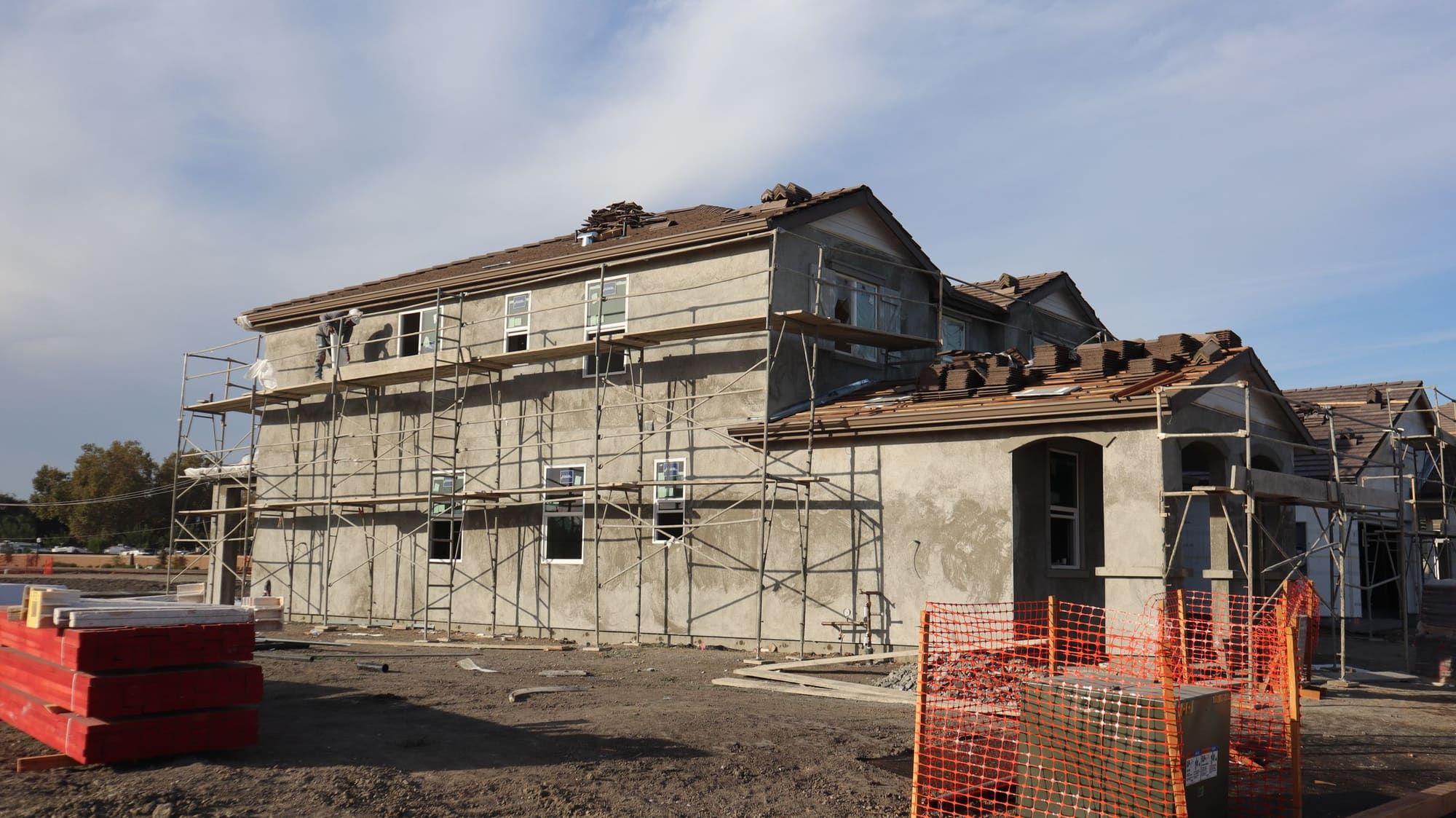
On a wood-framed wall the stucco you see is the last three of seven steps. The first four decide how long it lasts, and they are the ones a low bid leaves thin.
Wisconsin's Uniform Dwelling Code, which covers one- and two-family homes built since June 1, 1980, asks for a permanent weather-resistant finish, a water-resistive barrier on framed walls and flashing at openings. It does not spell out how to build a stucco wall. Those details come from the national model codes and the plastering standards behind them, so that is what we build to, and what the steps here describe.
-
Water-resistive barrier
Stucco is not waterproof, and manufacturers say so on their data sheets. The barrier behind it is what keeps the sheathing dry. In wet climates the model residential code also asks for a drainage gap behind the stucco, and we build one in.
-
Weep screed
A perforated metal edge at the bottom of the wall where water behind the stucco drains out. The model codes put it at or below the foundation plate line, at least 4 inches above soil and 2 inches above paving.
-
Flashing
Over every window and door, where a roof meets the wall, and a kickout at the bottom of each roof edge. Wisconsin's dwelling code requires flashing above openings and where walls meet roofs, whatever the siding.
-
Metal lath and control joints
Lath fastened to the studs holds the stucco on. Control joints divide big walls into panels. The lathing standard limits a panel to 144 square feet, and even then the manufacturers' association says joints are no guarantee of a crack-free wall.
-
Scratch coat
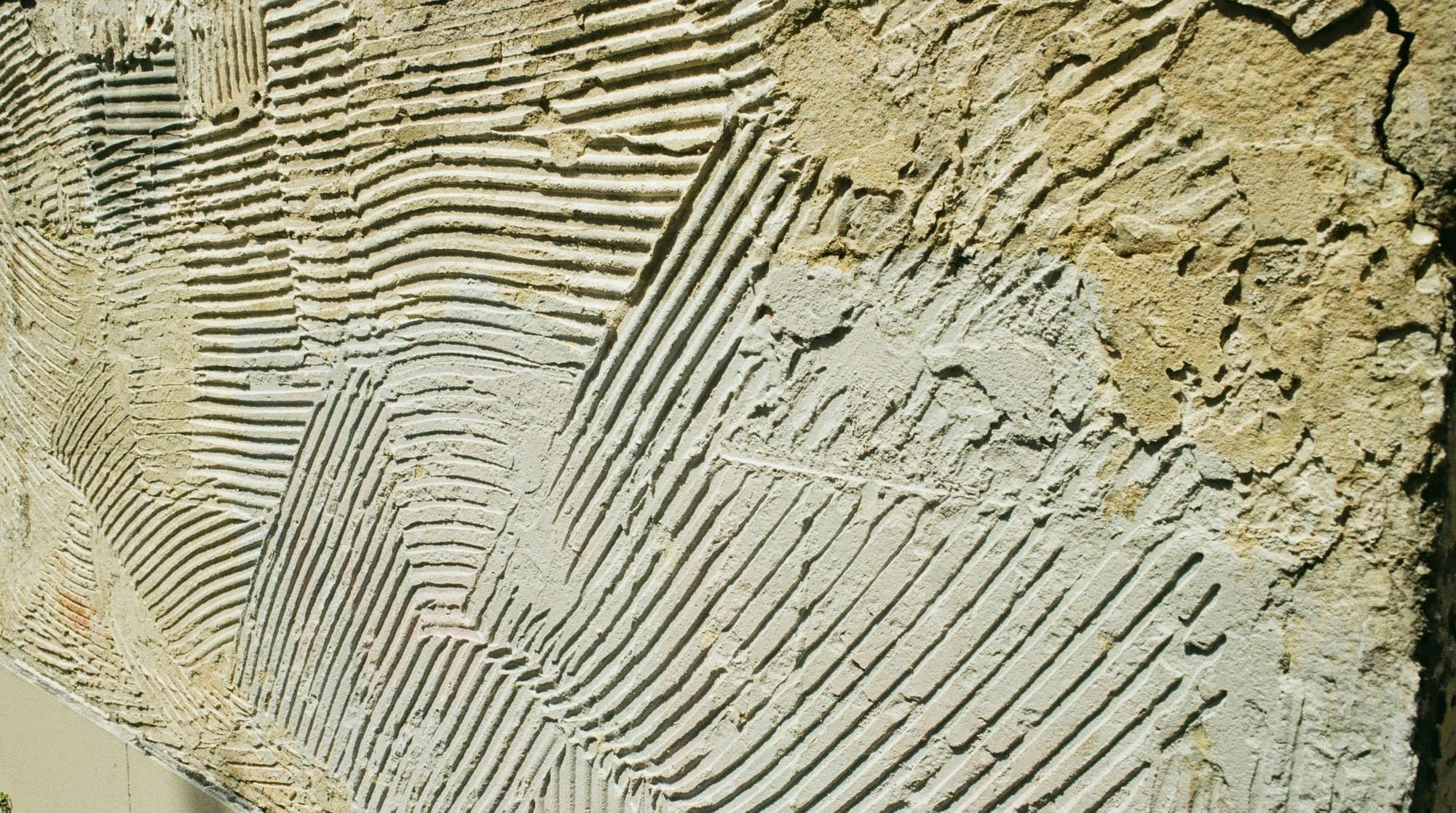
Pressed through the lath so it locks on behind, then raked rough.
-
Brown coat
Brings the wall to a flat plane. This is the coat that decides whether the finished wall looks true in low evening sun.
-
Finish coat
The color and the texture, a thin coat floated, troweled or dashed.
Stucco Chimney Installation and Stucco Over Block or Brick
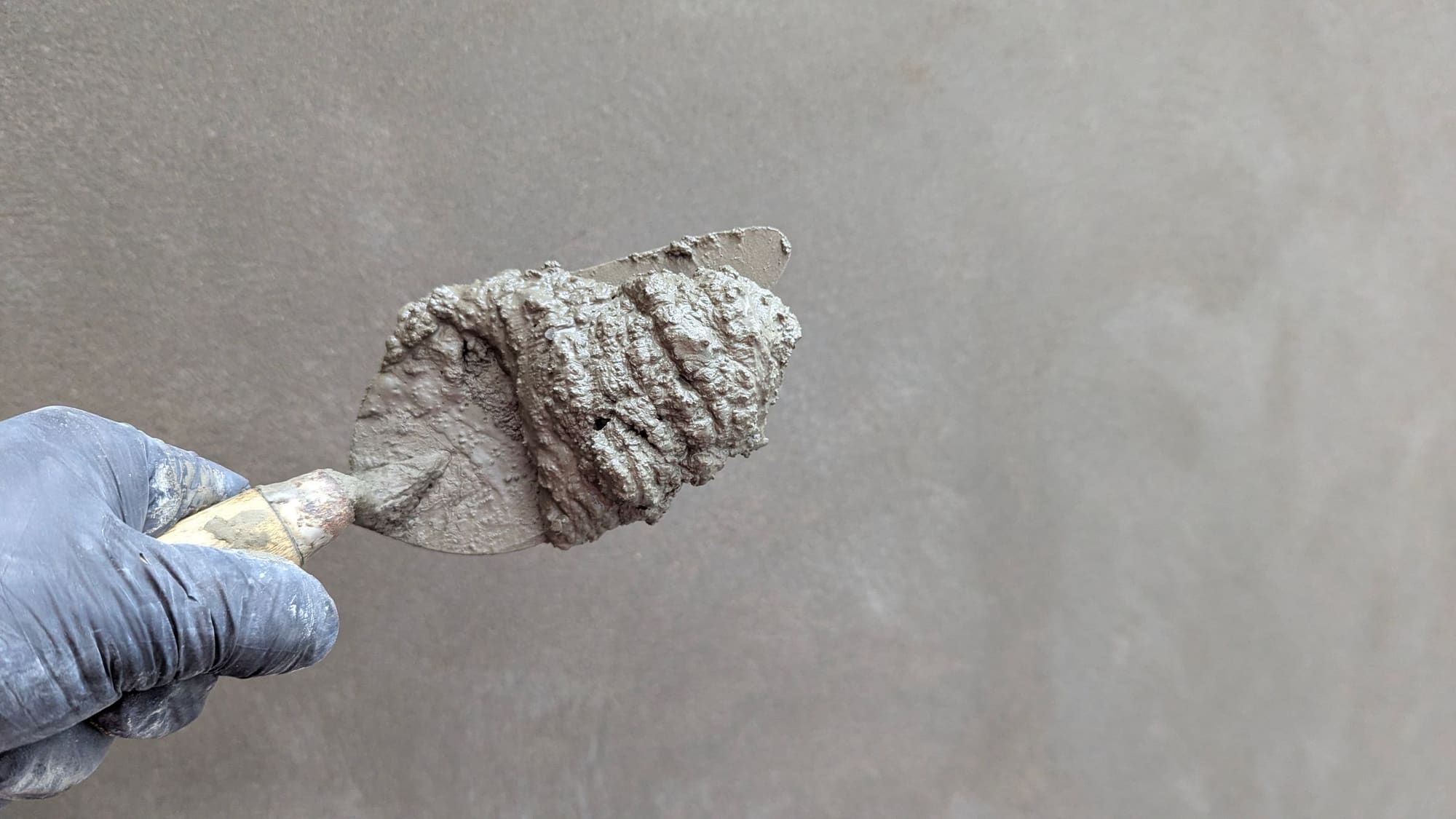
On solid masonry there is no lath and no paper. Stucco goes straight onto the wall, in two coats where a framed wall takes three. That makes masonry the simplest surface to stucco and the one where the wall underneath matters most.
Chimneys
A block chimney takes stucco well. A framed chimney chase can be stuccoed too, over lath, and needs the same step flashing and counter flashing at the roof as a brick chimney, plus a cap that sheds water past the stucco instead of onto it.
Stuccoing over a brick chimney that is already spalling hides the damage and traps the water that caused it. Fix the crown and the brick first. Both are covered on our chimney crown, flashing and brick repair page.
Block walls and foundations
New concrete block is rough and absorbent, which is what stucco wants. The wall is cleaned, dampened and coated. Painted or sealed block is different, because stucco will not hold on paint: it gets lath fastened to the wall or the coating taken off.
On the part of a foundation below ground the coat is called parging, and it is a base for dampproofing, not a waterproofing layer. Repairing old parging belongs with the wall under it, on our foundation parging and block repair page.
Old brick and stone
Think twice. The National Park Service advises against putting metal lath on historic masonry that is in sound condition, and stucco over good brick is very hard to undo. If the brick is failing, repair is usually the better money.
Where a stone base meets stucco above, the two are built as one wall. See stone veneer installation for the stone half.
How Long Stucco Installation Takes in a Wisconsin Season
Stucco can't be hurried. Each coat needs one to three days before the next goes on, and has to be kept damp for the first two or three so it cures instead of drying out. With lath, flashing and three coats, a whole house is weeks of work, not days.
It also needs warmth. The model building code calls for 40°F or higher while plaster is applied and protection from freezing afterward. Eau Claire's normal overnight low stays above 40°F from May through September, so that is when exterior stucco goes on here. Estimates and planning happen all winter.
Stucco Finishes, Color and Paint
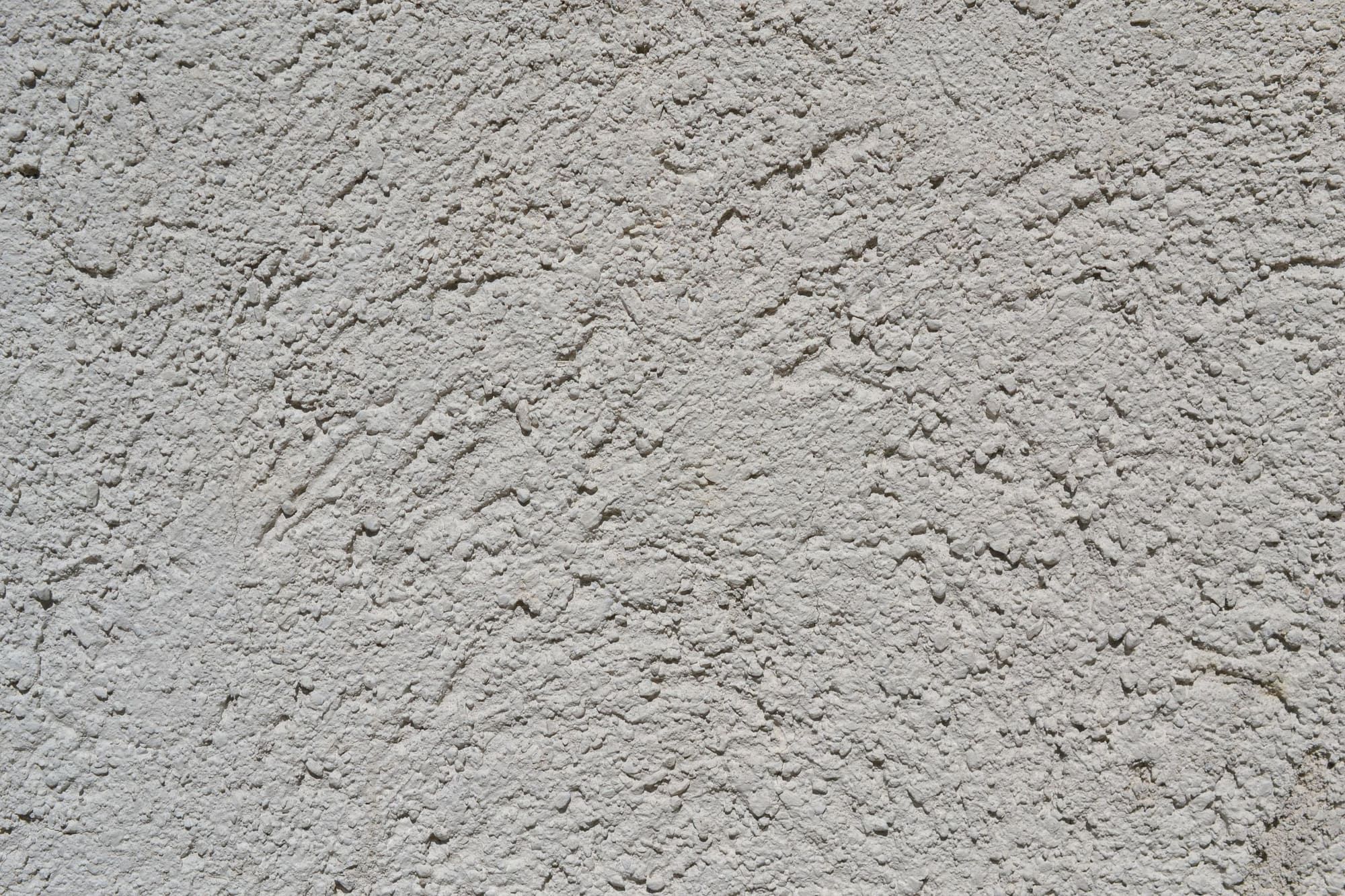
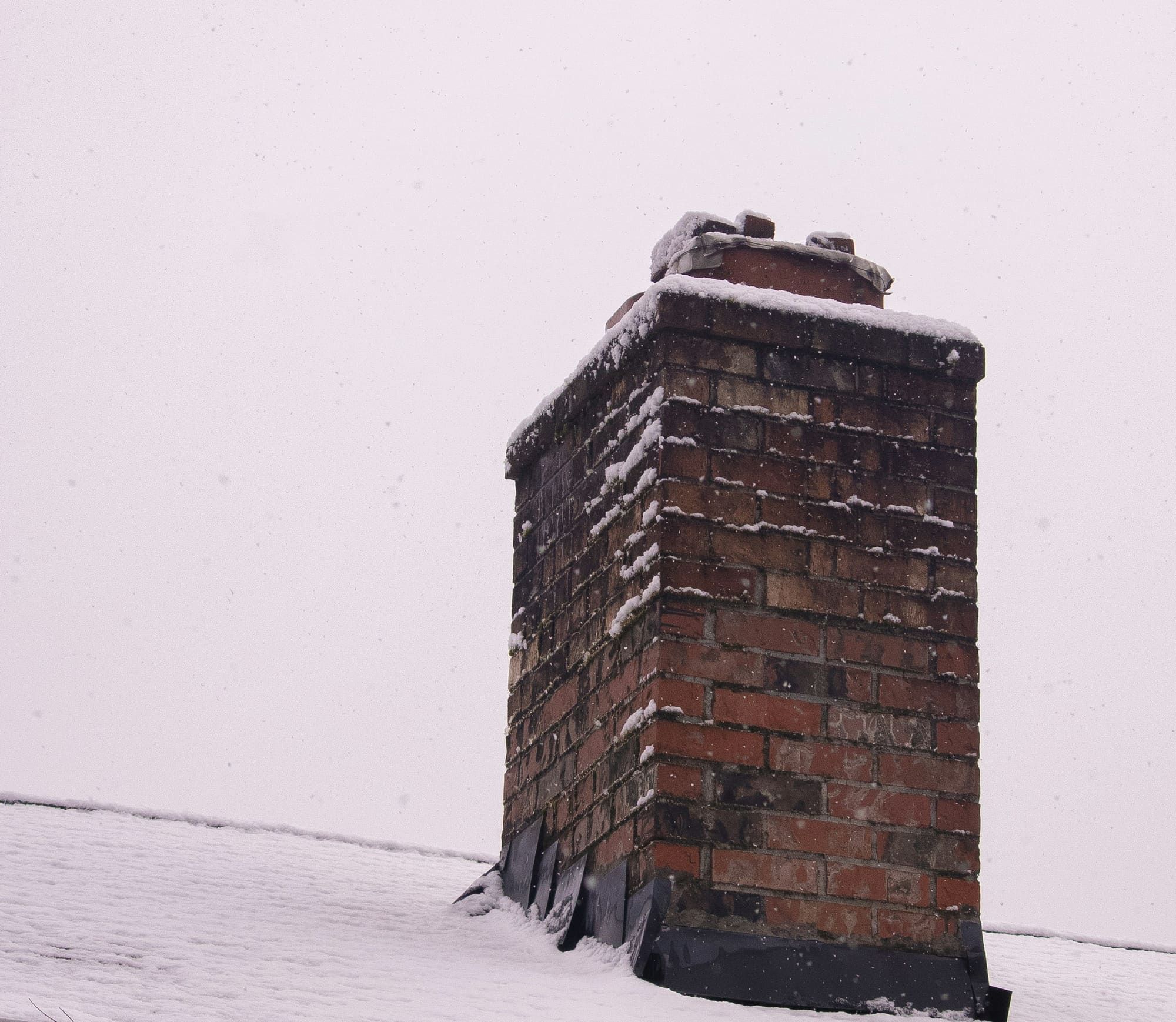
The finish coat sets the texture. A sand or float finish is even and fine-grained. A dash finish is thrown on and left pebbly. Troweled finishes, from a light skip to a heavy hand-worked pattern, are what most 1920s houses have. Rougher textures hide hairline cracks and patches better than smooth ones, which is worth knowing before you choose smooth.
Color can be mixed into the finish coat, so there is nothing to peel. Integral color fades slowly and can be refreshed with a fog coat, a cement-based color wash the Stucco Manufacturers Association describes as a way to even the color of new work or renew old stucco that has never been painted.
Paint works too, with two conditions from the same association. Wait until the new stucco has cured and its alkalinity has dropped, generally about two weeks. And use a paint that lets water vapor through, with a perm rating of 7 or higher on framed walls. A coating that seals the face keeps moisture in the wall. Once stucco is painted it stays painted, because a fog coat will not take over paint.
Stucco Siding Installation Cost
National figures from two cost guides, Fixr and HomeAdvisor: typical ranges, not quotes. Square feet here means wall area, not the floor area of the house.
| Item | Typical range | Notes |
|---|---|---|
| Three-coat stucco, installed | $6–$8 per sq ft | Fixr. HomeAdvisor puts traditional stucco at $6–$9 and stucco overall at $7–$9. |
| 1,500 sq ft of wall | $9,500–$11,500 | Fixr, average $10,500. HomeAdvisor's figure for the same area is $8,700–$16,000. |
| 2,000 sq ft of wall | $10,200–$18,700 | HomeAdvisor, average $13,600. |
| Materials only | $2–$4 per sq ft | Fixr, three-coat. One-coat is $1–$3 and EIFS $3–$5. |
| Removing old stucco | $1–$3 per sq ft | Both guides. A re-side pays this before any new work starts. |
| Synthetic stucco (EIFS), installed | $8–$12 per sq ft | HomeAdvisor, for comparison. |
Sources: Fixr stucco siding installation cost guide (updated August 29, 2025) and stucco siding repair cost guide (updated March 7, 2025); HomeAdvisor stucco siding cost guide (updated June 20, 2026) and stucco repair cost guide (updated June 19, 2026). National ranges, checked October 2026.
What moves the price
Height and scaffolding. The number of windows, doors and roof lines, since each one is flashing and hand work. Tear-off, if there is siding to remove. And the finish: a heavy hand-troweled texture takes longer than a float finish.
Read these numbers as a floor
Cost guides draw heavily on places where stucco is on every house and crews do nothing else. Here it is a specialty with a five-month season. A small job, such as a chimney or one gable, costs more per square foot than a whole house because setup does not shrink.
Questions to Ask a Stucco Contractor in Eau Claire
Cost, winters, cracks, permits and matching old stucco.
How much does stucco siding installation cost?
Fixr's national cost guide puts three-coat stucco at $6 to $8 per square foot installed, or about $10,500 for 1,500 square feet of wall. HomeAdvisor gives $7 to $9 per square foot and $8,700 to $16,000 for the same area. Those are national figures, not quotes, and they lean on parts of the country where stucco is the standard siding. Scaffolding, the number of windows to flash and tearing off old siding all add to them.
Does stucco siding hold up in Wisconsin winters?
It has for a century. The National Register listing for Eau Claire's Third Ward describes its houses as frame, brick and stucco homes built between 1870 and 1910, and the state's historic inventory lists stucco houses from the 1910s and 1920s that are still standing. What stucco does not survive here is staying wet: it needs flashing, a way to drain at the bottom, and clearance above soil and snow.
Will new stucco crack?
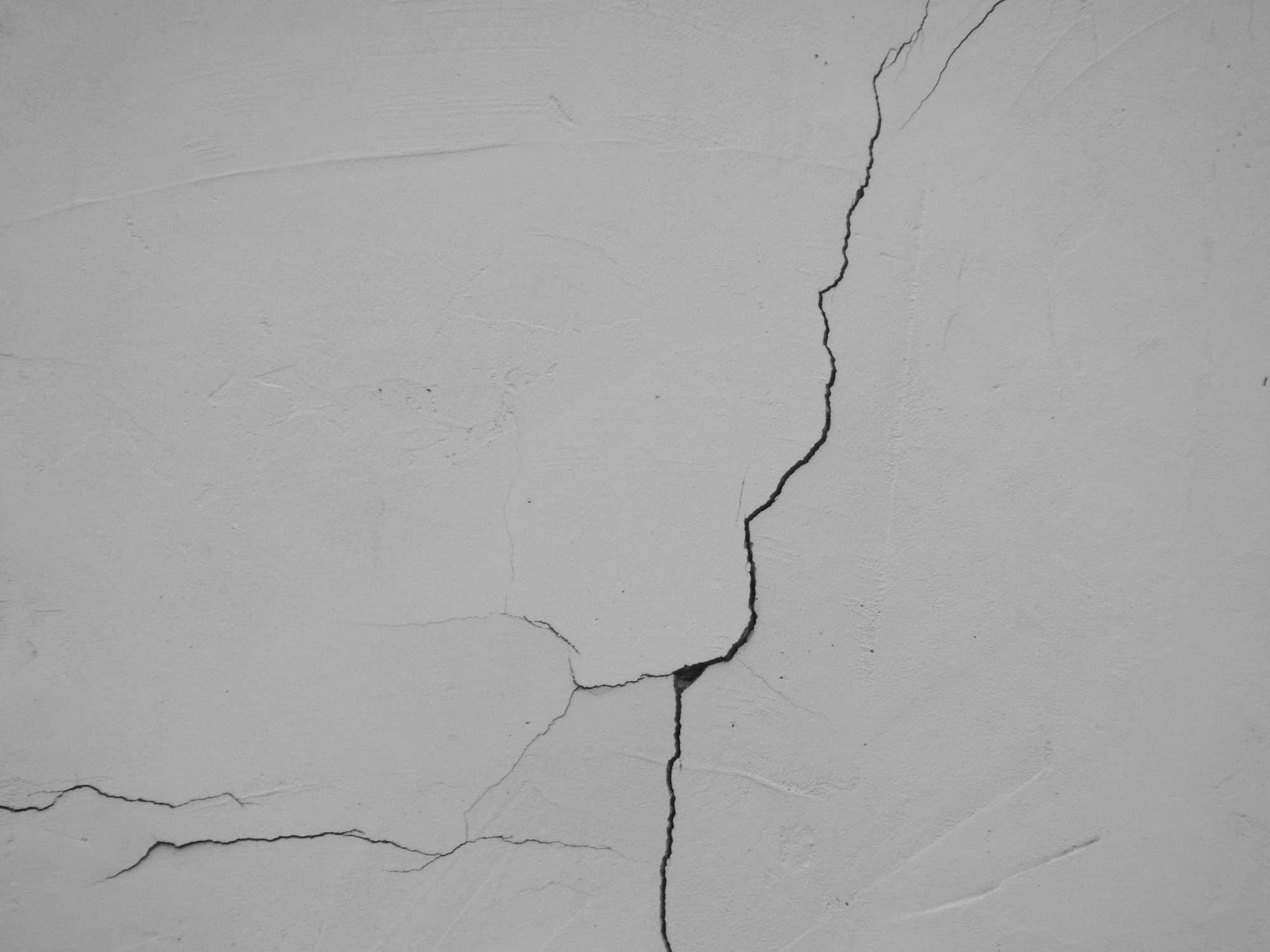
Probably a little. Cement shrinks as it cures and a wood-framed house moves with the seasons. The Stucco Manufacturers Association says an occasional hairline crack is not detrimental and should not be considered a defect. Good lath work, control joints and slow, damp curing keep cracks few and fine. A wide crack, or one that leaks, is a different matter and gets repaired.
Can stucco go over my existing siding or brick?
Over brick, block or concrete, yes: stucco goes straight onto clean, sound, unpainted masonry in two coats. Over wood, vinyl or lap siding, no. The old siding comes off to the sheathing so the barrier, flashing, weep screed and lath can go on in the right order. Painted masonry is the in-between case. Stucco will not grip paint, so the wall gets lath fastened to it or the paint removed.
Do I need a permit for stucco siding in Eau Claire?
Plan on one. The City of Eau Claire's Inspections Division says a building permit is generally needed any time a building is altered, and its list of examples includes siding. We confirm the requirement for your address before starting. On a new house the stucco is normally covered by the builder's permit. Outside the city, the answer comes from your town or village.
Are you stucco contractors for new construction, or only repairs?
Both. We install three-coat stucco on new houses, additions, chimneys and block walls, and we repair existing stucco and EIFS. On new construction, bring us in before the windows are trimmed and the roof edges are finished, because the flashing behind the stucco is set by whoever gets there first.
Can you match new stucco on an addition to the old house?
The texture, yes, with sample panels made first so you can approve it. The color of fresh stucco will not match walls that have weathered for decades. The usual answer is to fog coat or paint the old and new walls together once the new stucco has cured, so the whole house is one color. If the old stucco is lime-based, the new mix is chosen to suit where the two meet.
Get a Free Stucco Installation Estimate
Tell us what is being stuccoed and what is on the wall now. For new construction, send the elevation drawings if you have them. For an addition, a close photo of the existing stucco shows us the texture to match.
- We measure the walls and count the openings
- You see texture samples before choosing a finish
- The written estimate lists barrier, flashing, lath and all three coats
Get a Free Estimate
Tell us what's going on with the masonry or stucco. Prefer to talk? Call or text (715) 597-4359.
Thanks, we have your request.
We'll be in touch about your estimate. If it's easier, text photos of the job to (715) 597-4359.
Related Stucco and Stone Services
-
Stucco Repair
Most stucco walls need a patch, not a replacement. Start here if the wall is already stucco.
-
EIFS & Synthetic Stucco Repair
What synthetic stucco is, how it differs from cement stucco, and how it is repaired.
-
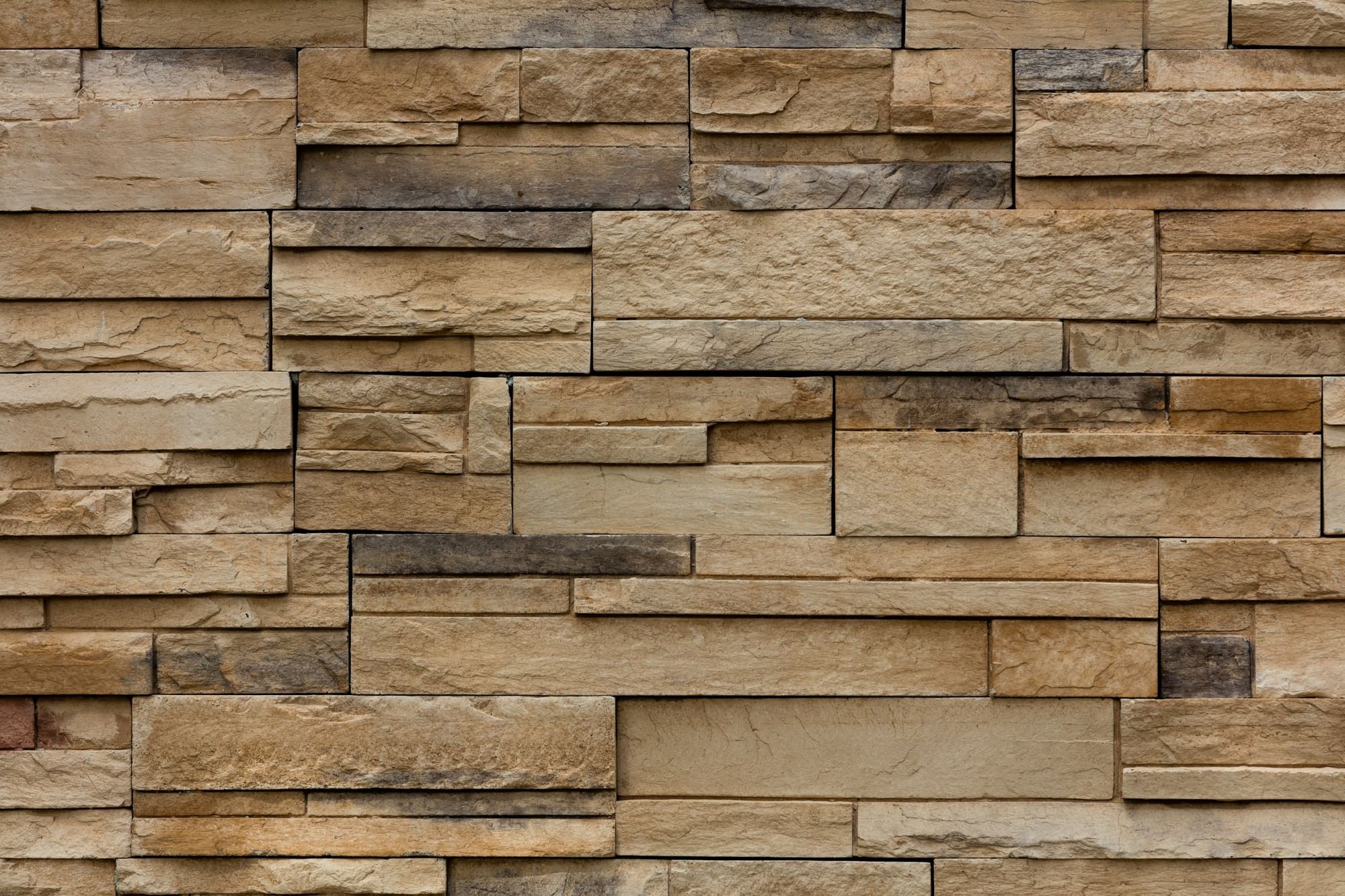
Stone Veneer
A stone base under stucco shares its barrier, lath and scratch coat with the wall above.
Planning Stucco for Next Season? Get on the List Now.
Send a photo of the house and say which walls you have in mind. The form is above and on the contact page. If the job also has brick or stone in it, that work is on our masonry contractor in Eau Claire home page.